
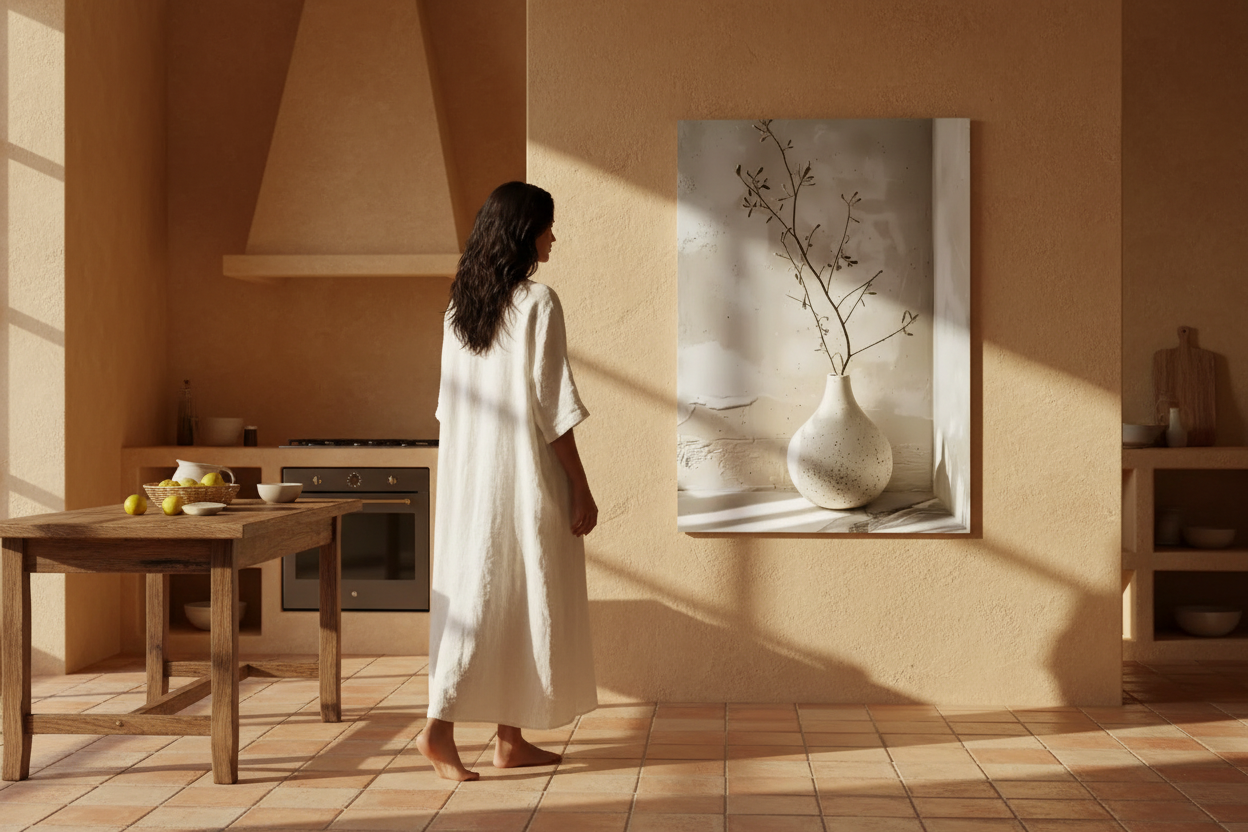
Decorating a Mediterranean kitchen: colors, materials, and posters
Mediterranean cuisine isn't just about recipes. It's an atmosphere: the southern light, raw materials, a warm and soothing palette. Here's how to recreate this spirit on your walls — including wall posters — for a kitchen you'll want to linger in.
Reading time: 6 min
A sunny and natural palette
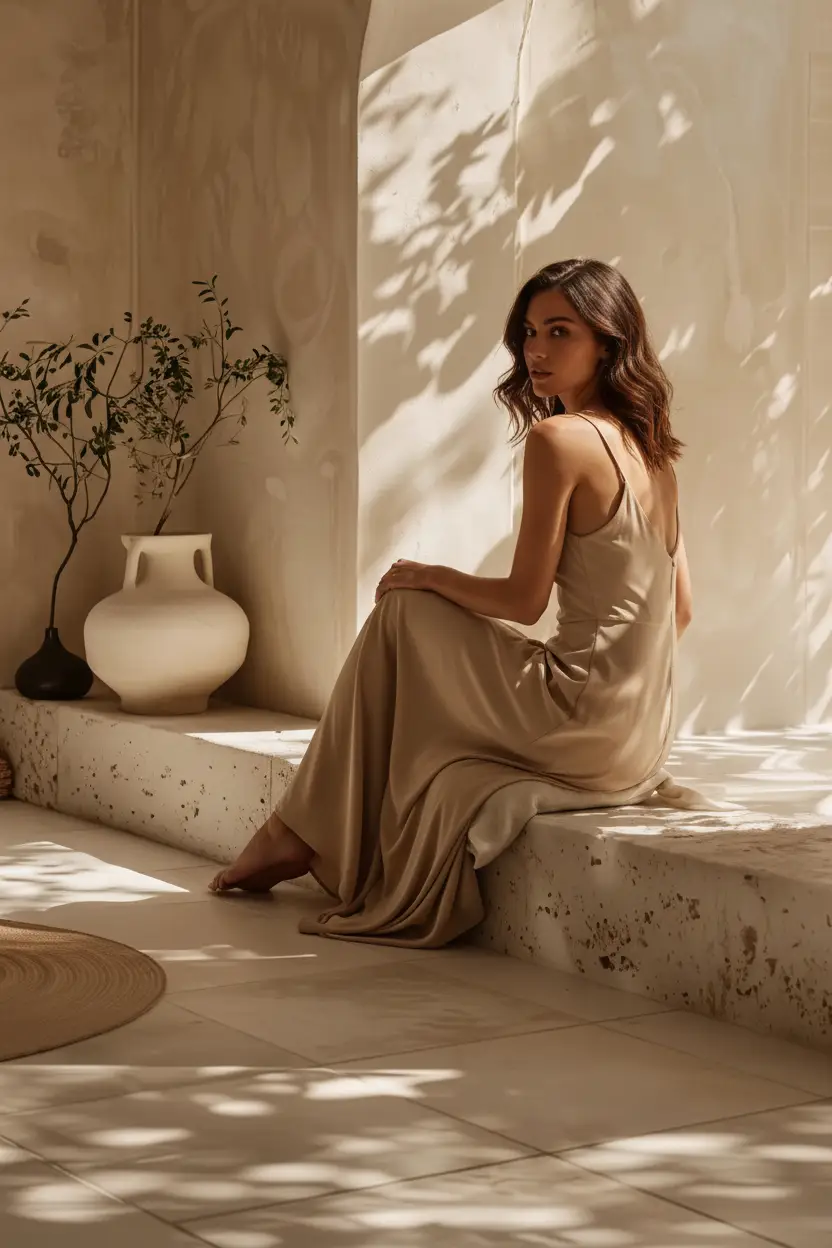
Terracotta, ochre, ecru, olive green: Mediterranean colors warm up a kitchen without making it feel heavy. They evoke the facades of Provence, the terracotta of Andalusia, the whitewashed walls of Santorini. Combine them with raw materials — wood, terracotta, stone, linen — for that feeling of cultivated simplicity typical of the South.
Combinations that work:
- Terracotta + ecru + natural wood — the warmest and most authentic combination.
- Ochre + off-white + stone — brighter, ideal for kitchens with less light.
- Olive green + sand + linen — fresh and natural, evokes the Mediterranean garden.
To learn more about colors: Mediterranean colors that visually enlarge a room and Ochre, the color of the sun.

What posters for a Mediterranean kitchen?
The choice of subject is crucial. The idea: evoke the Mediterranean without falling into a tavern decor — no braided garlic, no cartoon tomatoes, no postcards.
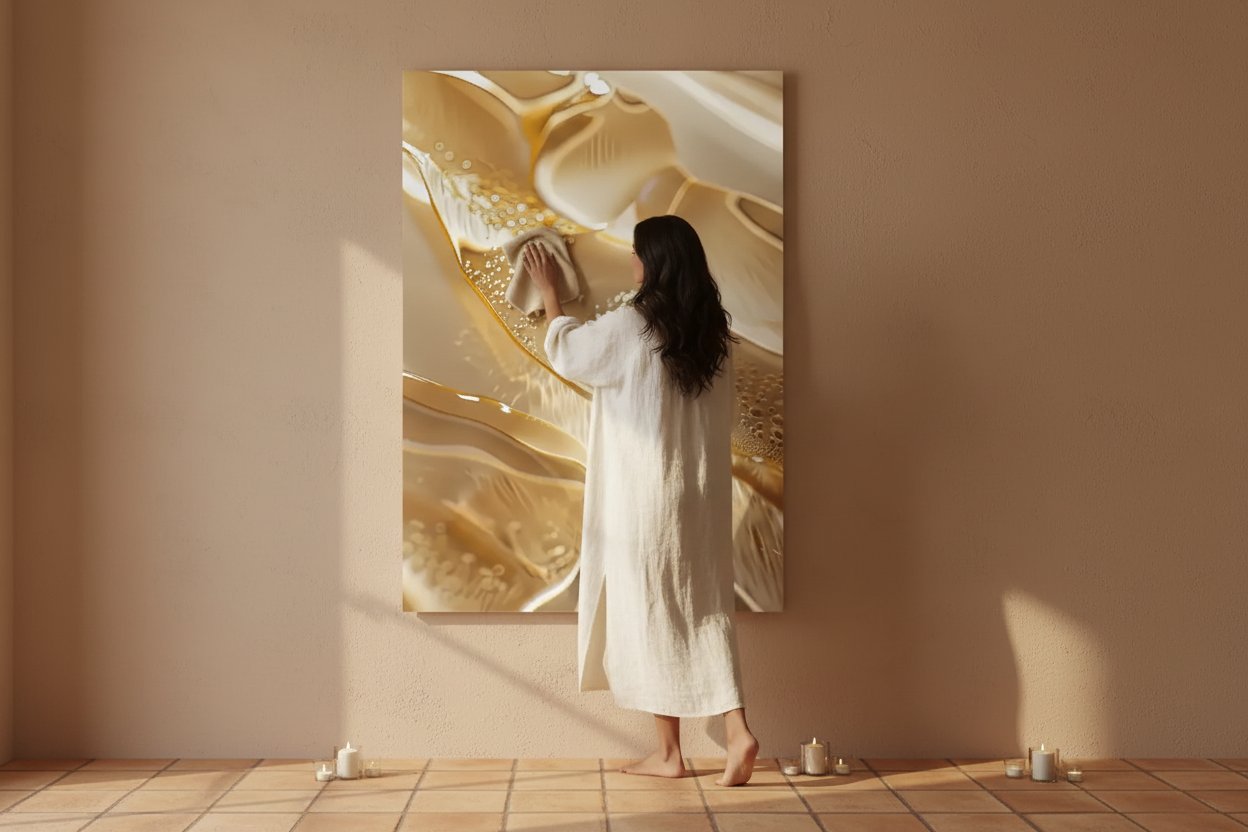
- Plant subjects — a minimalist olive tree, a branch, a fig leaf. They evoke the Mediterranean garden with elegance. Our Végétal collection is ideal.
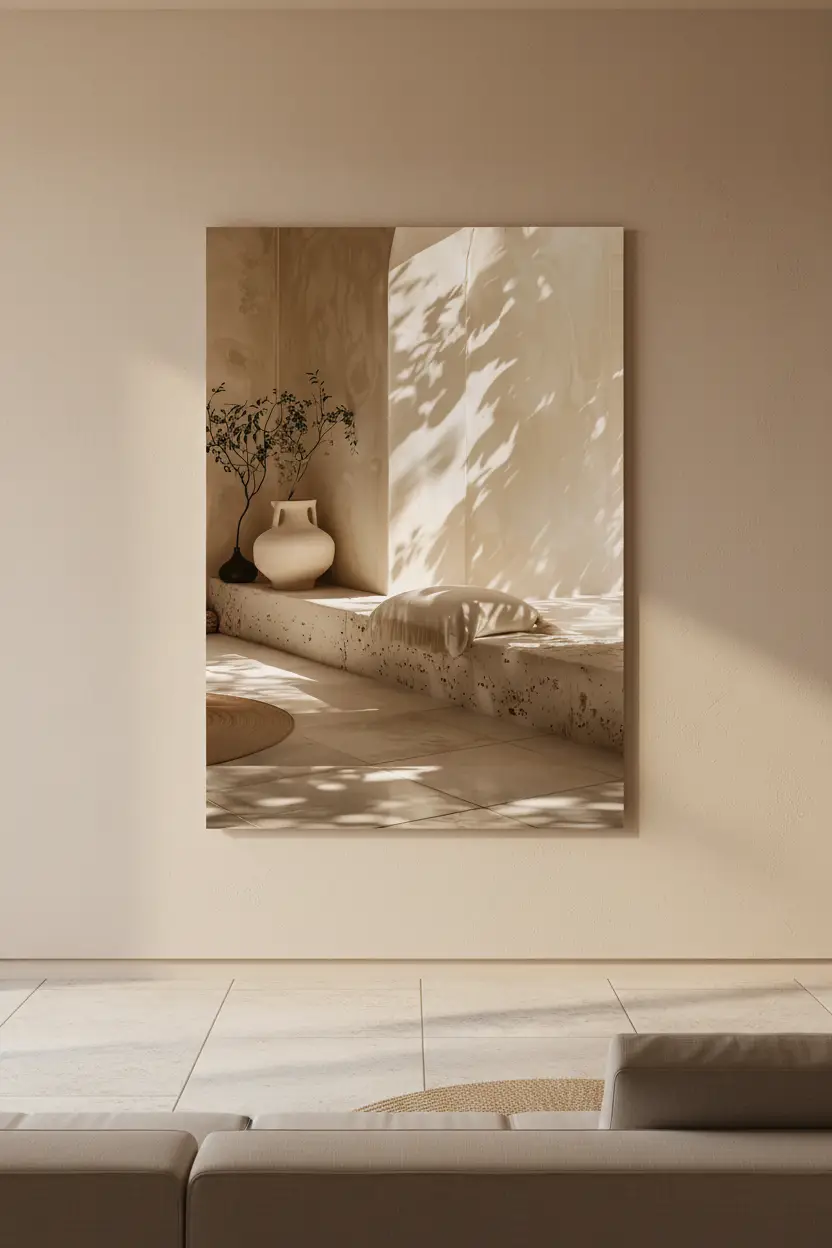
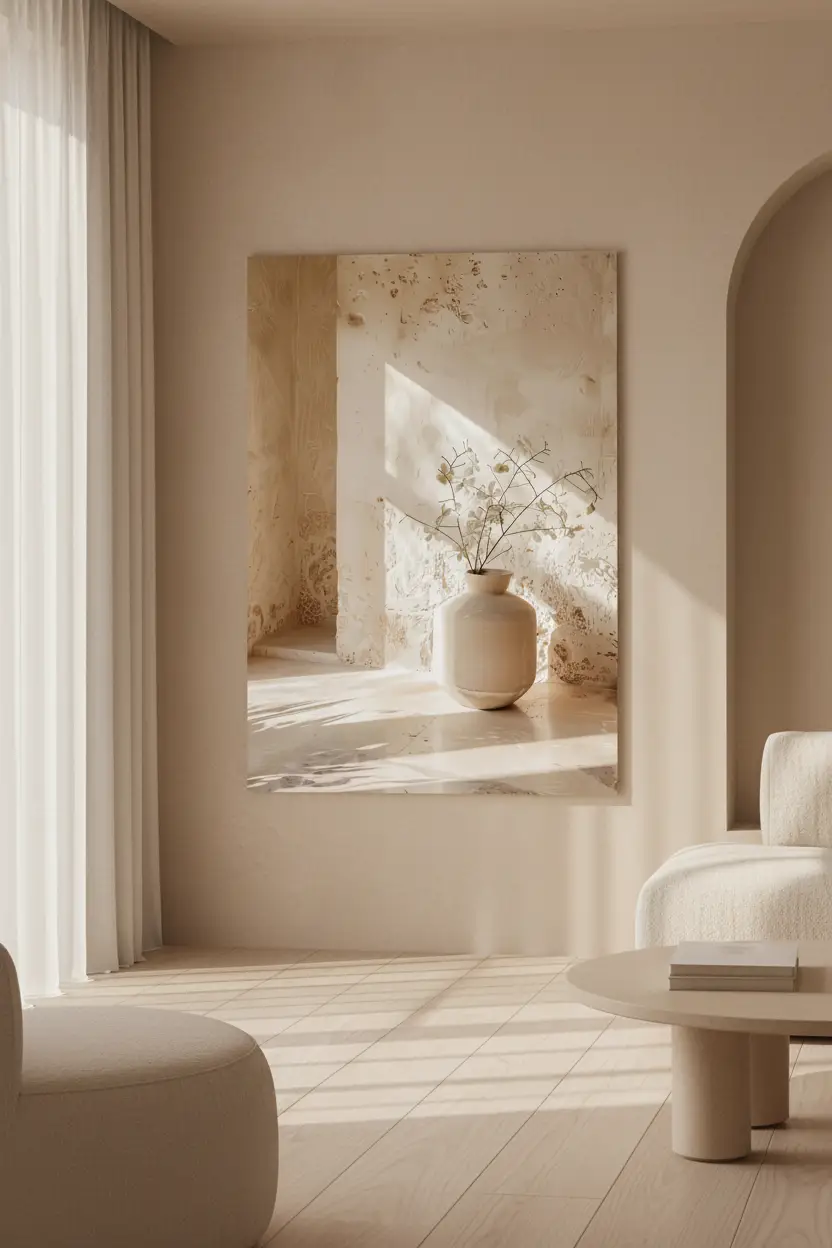
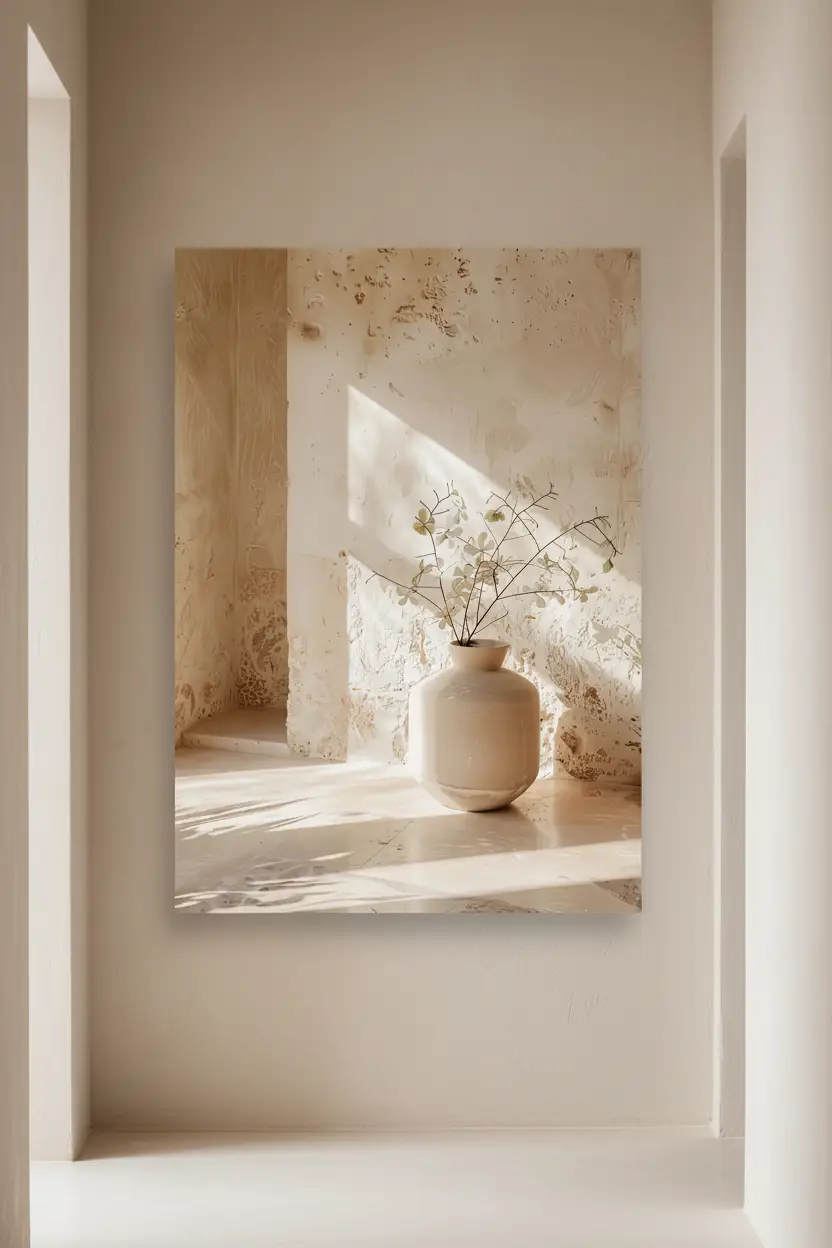
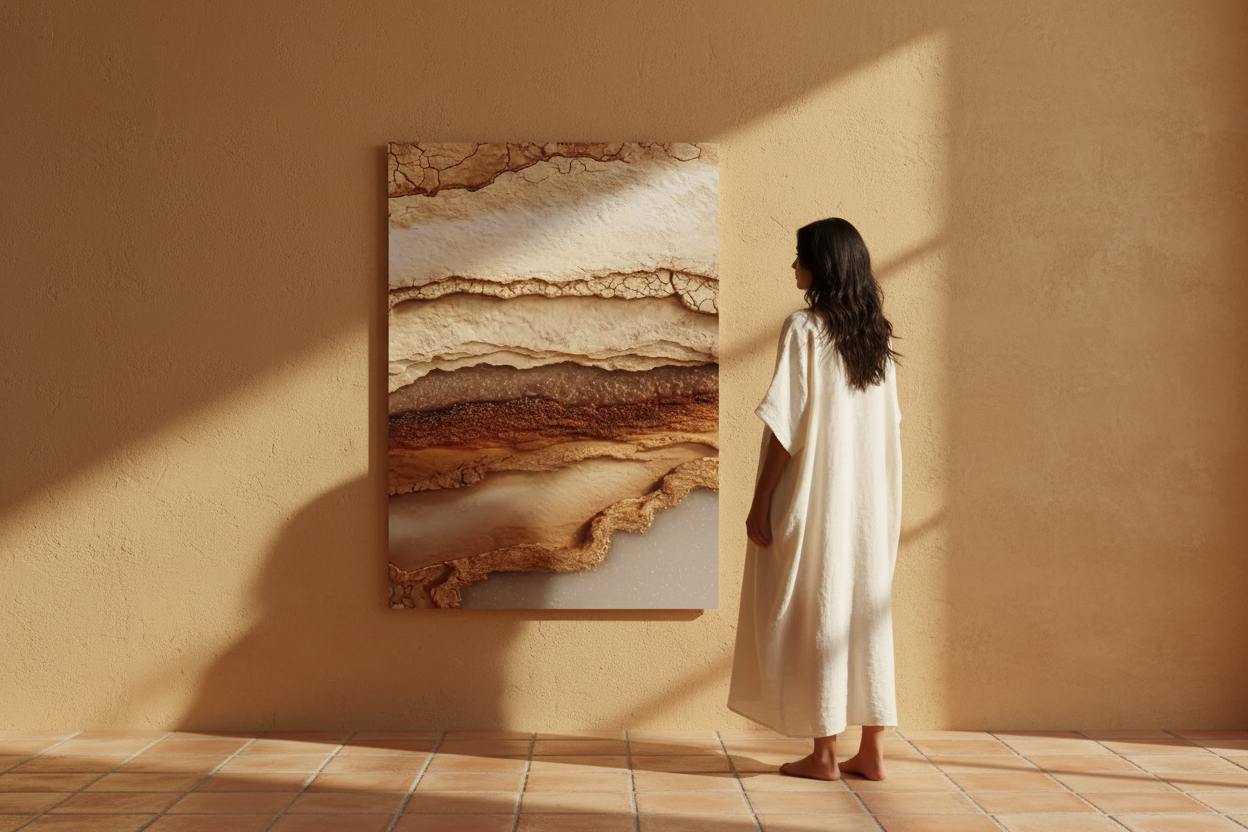
- Mineral visuals — travertine, stone, cracked plaster. They bring an architectural and contemporary touch. Our Minéral collection is perfect for this effect.
- Light studies — raking light on a wall, a plant's cast shadow. Our Lumière collection captures these moments.
- To avoid — overly literal subjects (food, utensils) that age poorly and reduce the kitchen to its sole function.

Where to place posters in a kitchen
The kitchen is a demanding environment for posters: steam, splashes, direct light. A few simple rules for choosing the right location:
- Choose a wall away from splashes — avoid the immediate area behind the hob and sink. A side wall or the back of the kitchen are ideal.
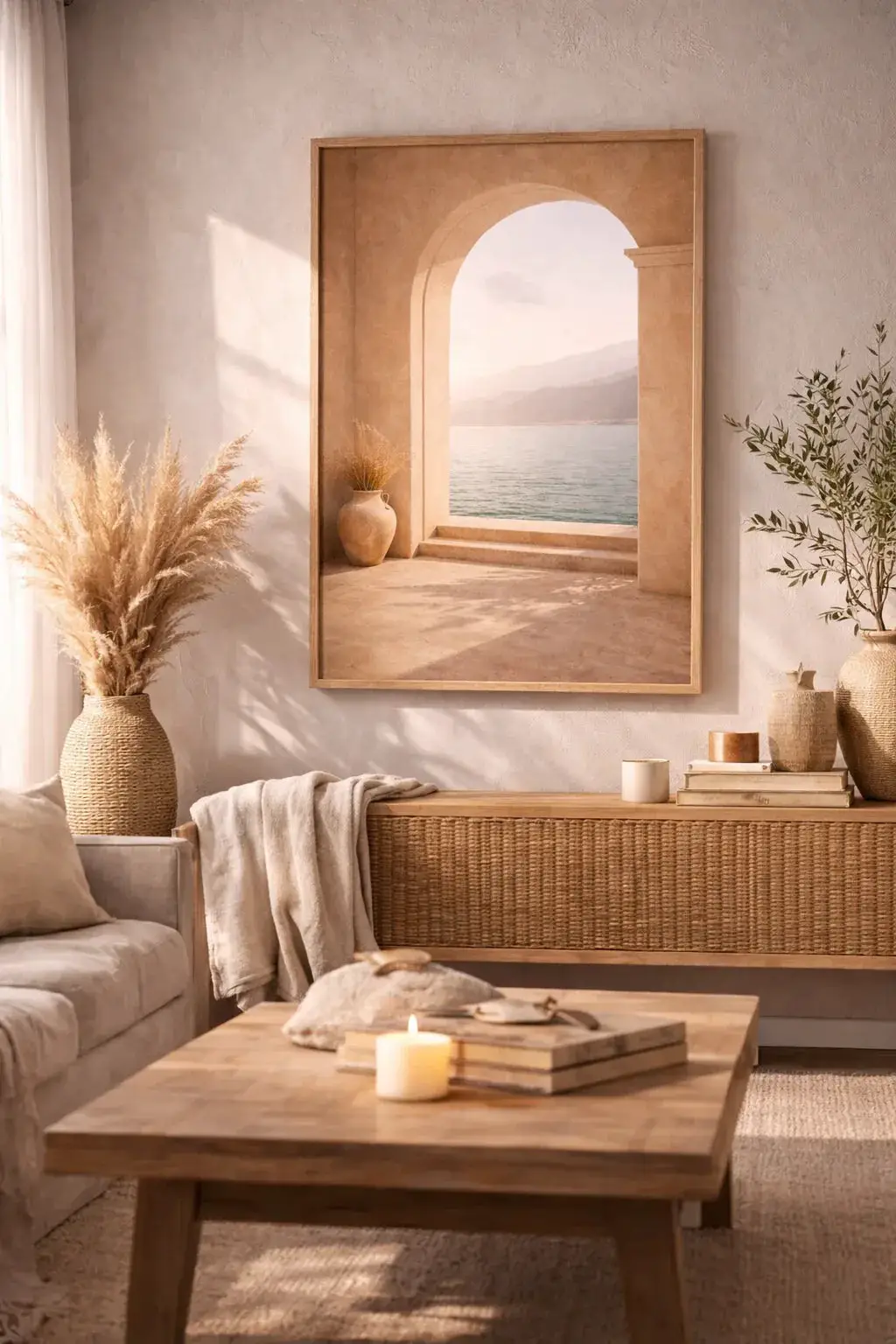
- Above a serving trolley or sideboard — a natural location that creates a focal point without risk.
- In the dining area — if your kitchen includes a dining space, this is the ideal place for a true composition.
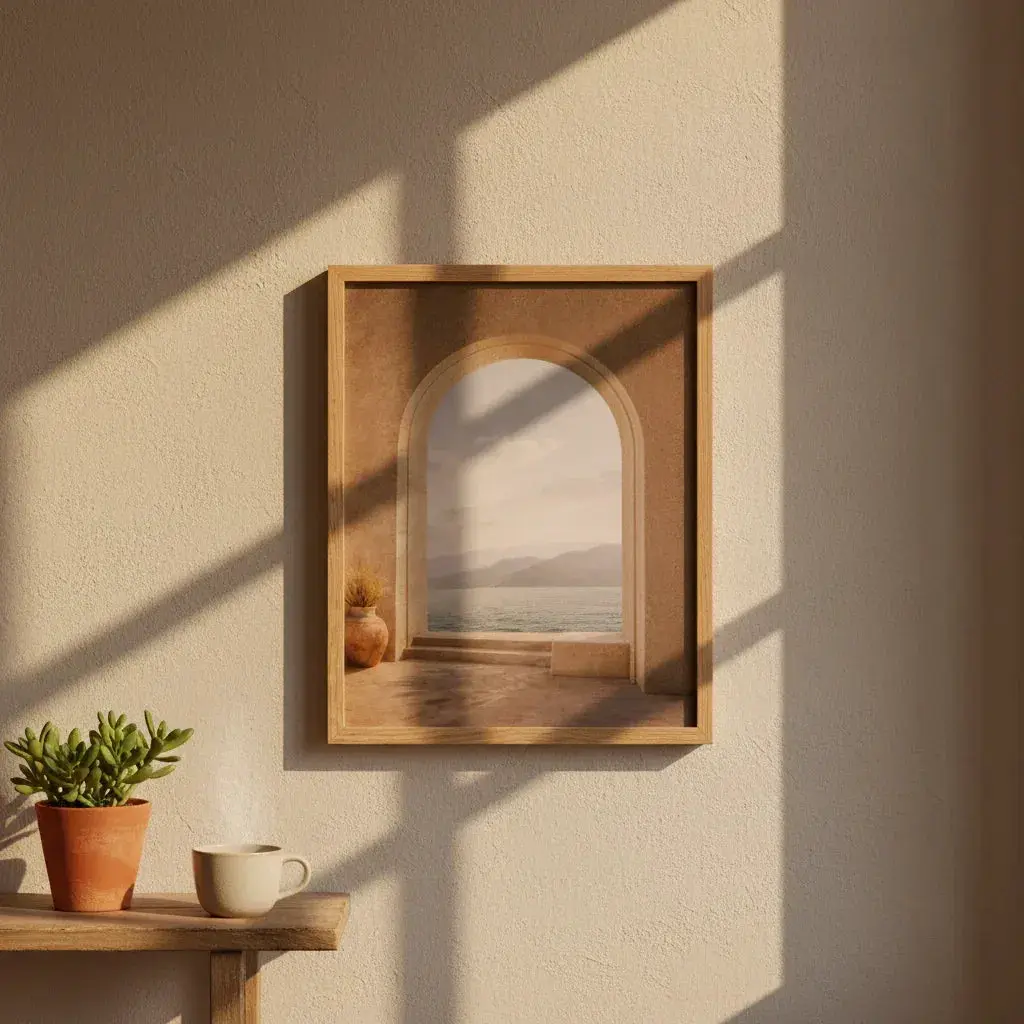
- Opt for framing — in a kitchen, the oak framed version under glass protects better than a bare poster against steam and ambient humidity.
To learn more about hanging: How to hang a poster: the complete guide.

The dining nook: your best ally
If your kitchen includes a dining area, it's the ideal place for a true composition. Two or three posters above the table create a warm focal point — like a small gallery wall that transforms a functional corner into a living space.
A few rules for a successful composition:
- The width of the composition should not exceed that of the table.
- Space the posters 5 to 8 cm apart for the gallery effect.
- Maintain the same palette and finish (all framed or all posters).
Use our gallery wall configurator to visualize the result before ordering. To learn more: Create an elegant gallery wall.

Mistakes to avoid
- Hanging too close to the hob or sink — steam and splashes quickly damage the paper.
- A bare poster in a humid kitchen — prefer framing under glass to protect the poster.
- Overly literal subjects — avoid obvious "kitchen" posters that age poorly.
- Too small a format — a small poster gets lost in a large kitchen. Go for a larger format or create a composition.
Discover our kitchen posters →
FAQ
Which wall poster for a Mediterranean kitchen?
Choose plant subjects (olive tree, branch) or mineral subjects (travertine, stone) in warm tones — ochre, sand, ecru. Avoid overly literal subjects (food, utensils) that age poorly. Our Végétal collection and our Minéral collection are ideal.
Where to hang a poster in a kitchen?
On a wall away from splashes and steam: above a serving trolley, along a dining nook, or on the back wall. Avoid the immediate area behind the hob and sink. Opt for oak framing under glass to protect the poster.
Should posters in a kitchen be framed?
It is highly recommended. The steam and ambient humidity in a kitchen can damage a bare poster over time. Our solid oak frame under glass protects the poster while providing a gallery finish.
Which wall poster for a small open living room kitchen?
For an open space, choose a coherent palette between the two areas. A large A1 format above the dining area creates a focal point that structures the space. Alternatively, a gallery wall of 2 or 3 50×70 cm posters above a serving trolley works very well.


Leave a comment
This site is protected by hCaptcha and the hCaptcha Privacy Policy and Terms of Service apply.