
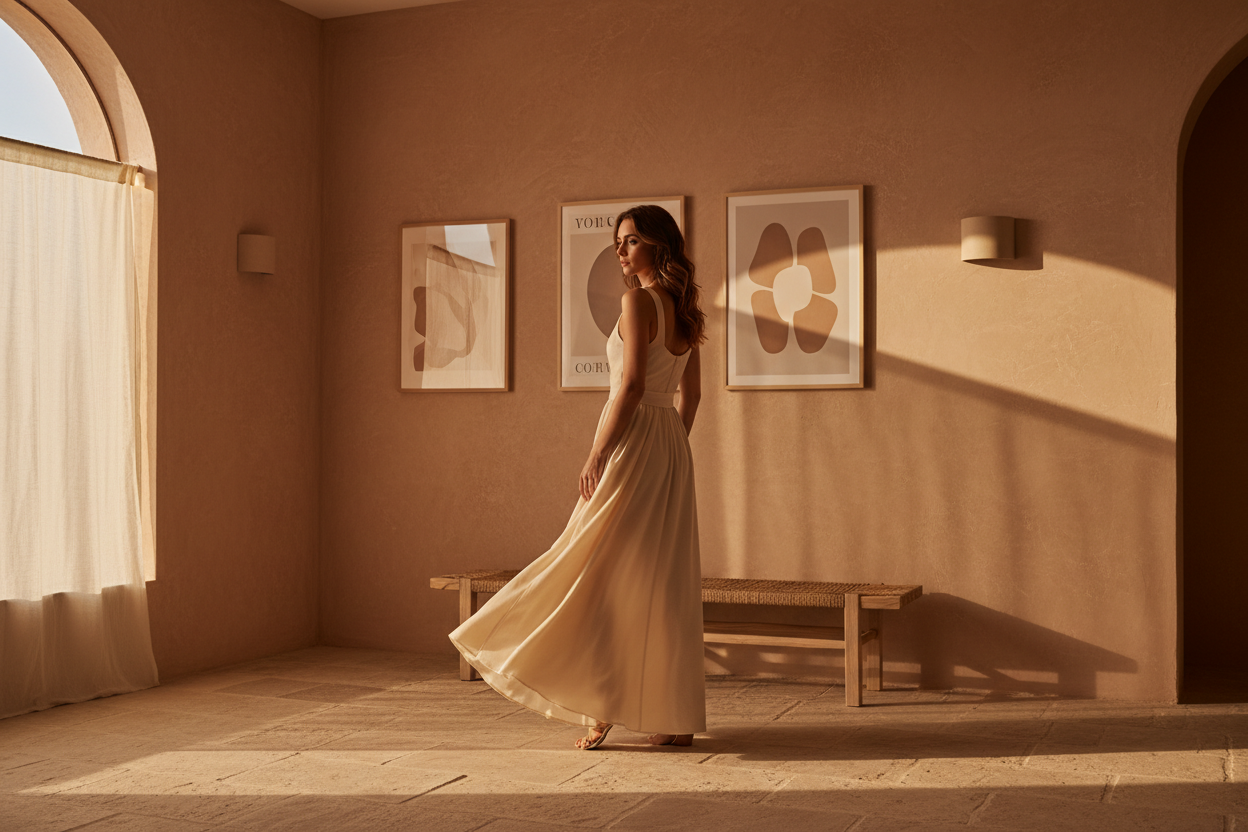
Mediterranean Colors: Sand, Ivory, Terracotta — How to Pair Them
Mediterranean colours are not a palette in the strict sense of the word — they are materials that have taken on the colour of the sun, the stone and the earth. The sand of the beaches of Santorini, the ivory of limewashed Andalusian façades, the terracotta of Tuscan roof tiles and Greek pottery. These warm, neutral tones that dominate the interiors of southern Europe have a rare quality: they age well, they naturally go together, and they turn any space into a luminous refuge. Here is how to combine them with precision.
Reading time: 6 min
Understanding the Mediterranean palette: three families of tones
The Mediterranean palette is organised around three families of tones that naturally complement one another:
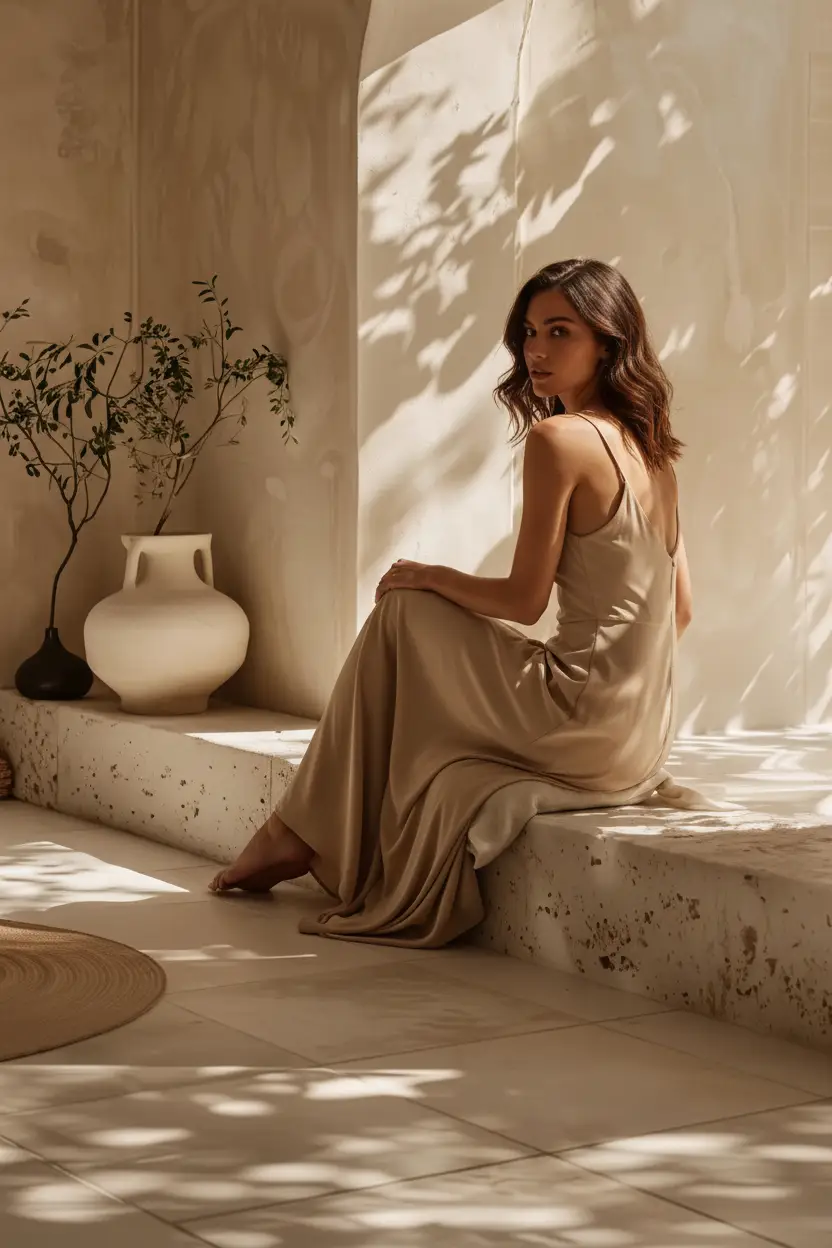
The warm neutrals — sand, ivory, off-white, deep beige — form the base. These are the tones of limewashed walls, travertine floors and sun-bleached façades. They reflect the light without ever being harsh, and they create a soothing base on which everything else can rest.
The terracottas — terracotta, ochre, soft rust, pink brick — bring the warmth and the depth. These are the tones of pottery, of roof tiles, of terracotta floors. Used as an accent, they warm up a space immediately without saturating it.
The organic naturals — dusty olive green, Mediterranean midnight blue, stone grey — come in as very discreet touches to anchor the palette in the nature of the south. Discover our Minéral collection and our Lumière collection to find these tones again in your wall posters.

Sand and ivory: the base of every Mediterranean interior
Sand and ivory are the two pillars of the Mediterranean palette. They are not interchangeable: sand is warmer, more golden, more earthy — it evokes the beach and the stone. Ivory is cooler, more luminous, more refined — it evokes limewash and marble. Put together, they create a subtle depth that avoids the monotony of all-white.
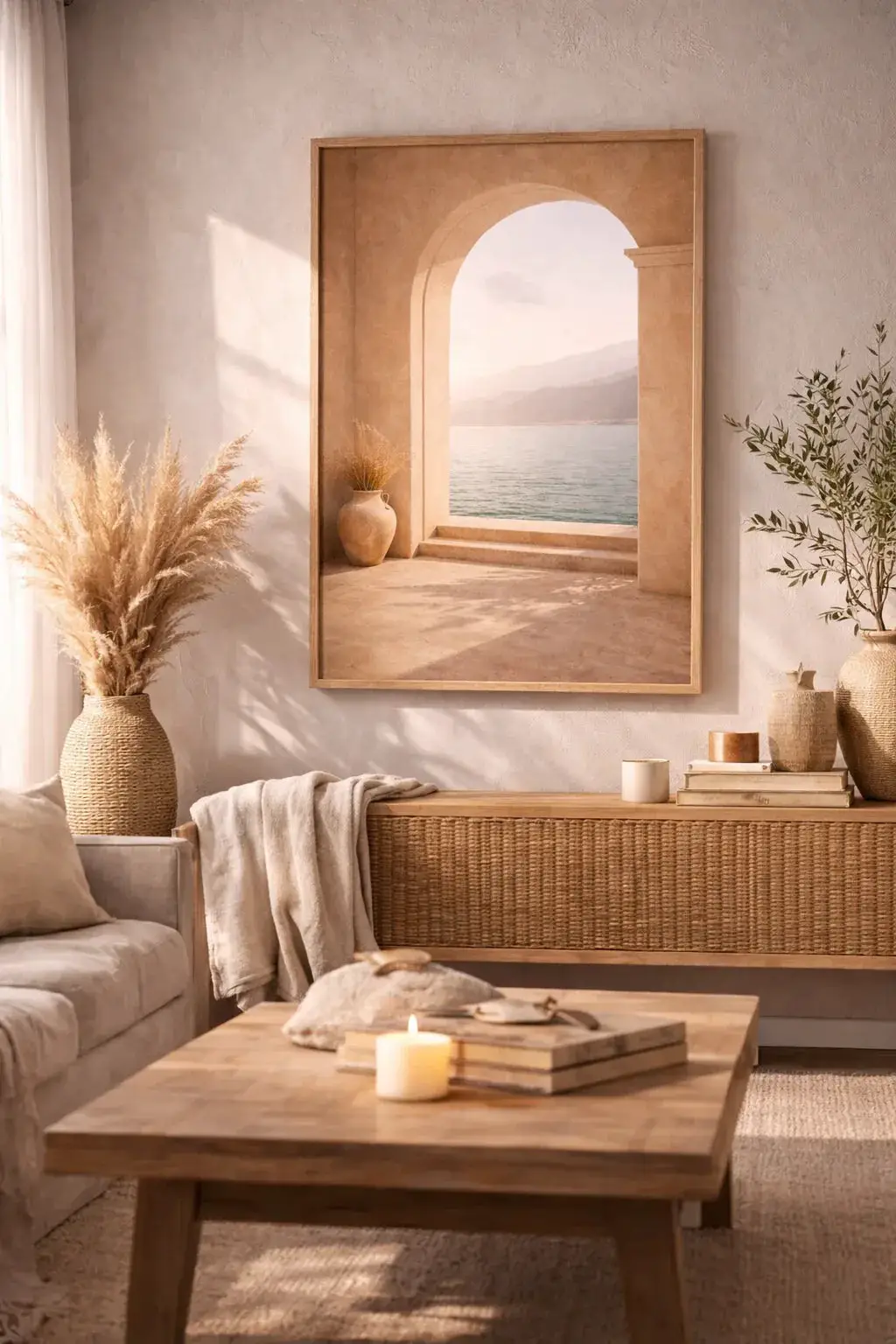
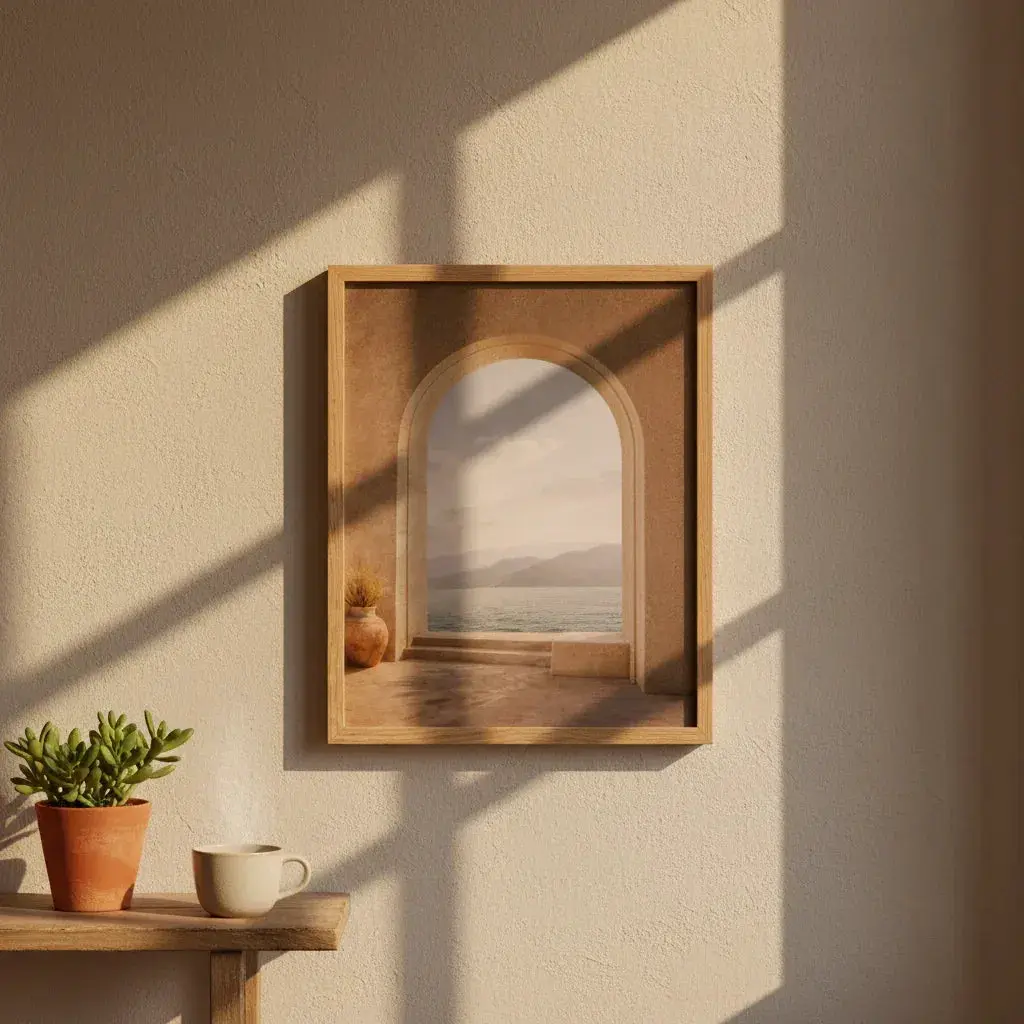
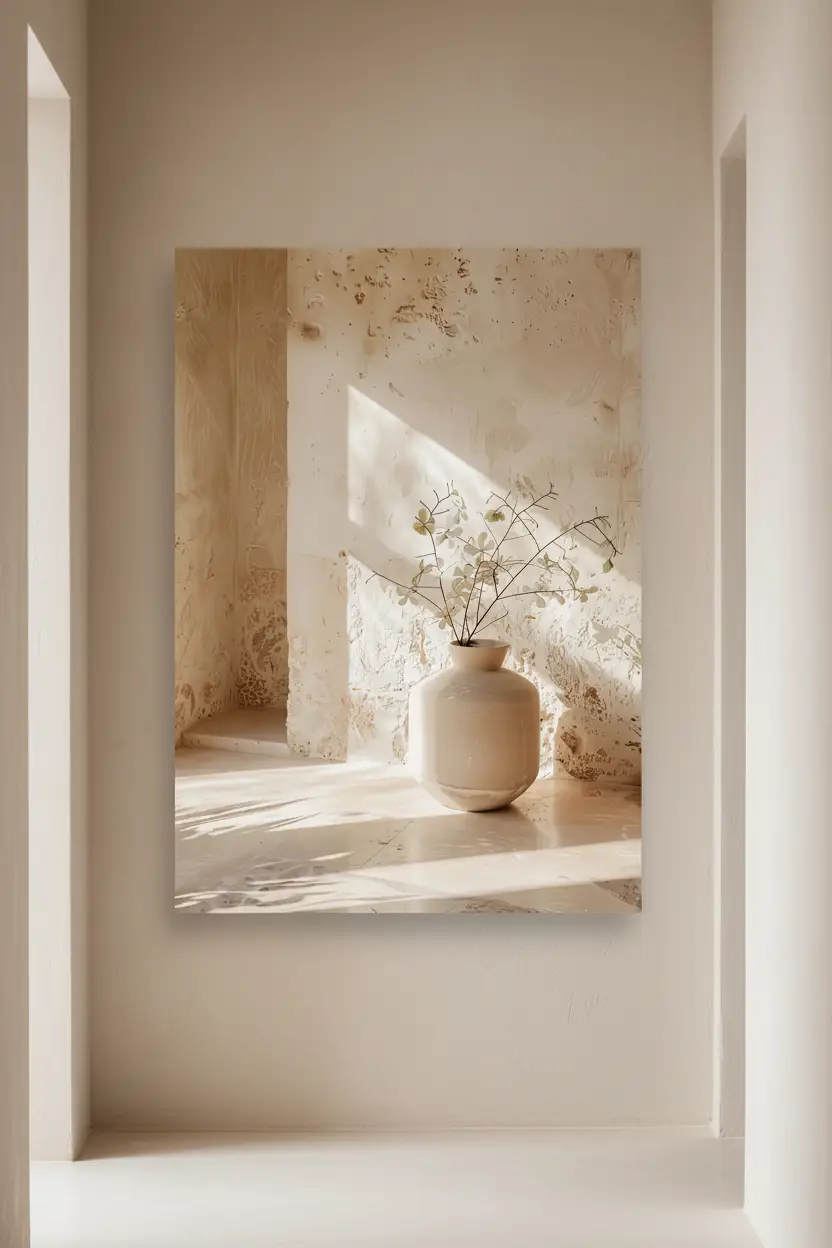
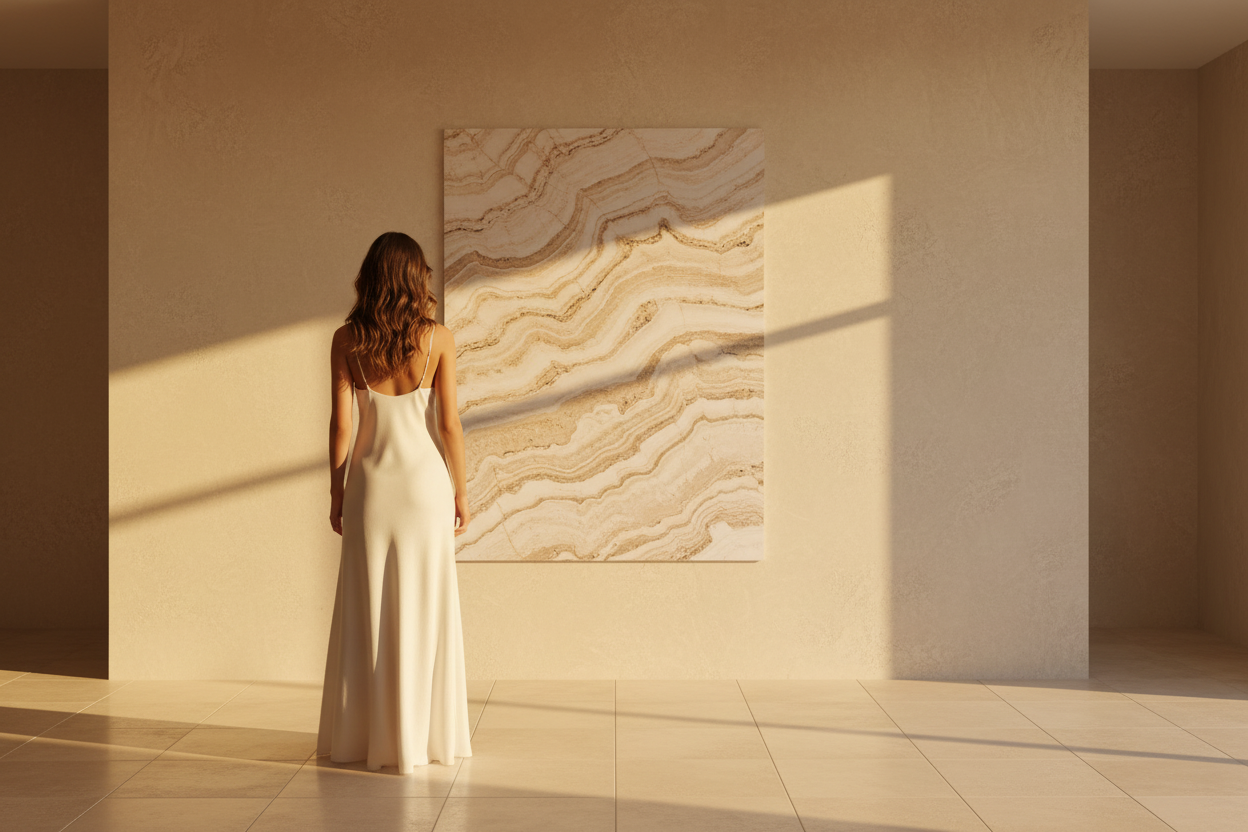
In an interior, sand is ideally applied to the large volumes: walls, floor, sofa. Ivory comes in as a soft contrast on textiles, light fittings and frames. This layering of tones that are close but distinct is what gives Mediterranean interiors their apparently simple visual richness. Our poster Light on Plaster captures this nuance between sand and ivory perfectly.
Terracotta: the accent that brings everything to life
Terracotta is the signature colour of Mediterranean decor. But be careful — terracotta is measured out, it is not spread around. A cushion, a vase, a flowerpot, a candle: these small touches of terracotta are enough to warm up a sand and ivory space immediately without saturating it.
The golden rule: terracotta should never take up more than 10-15% of the visual surface of a room. Beyond that, it crushes the other tones and loses its power as an accent. Below that, it disappears. The right dose creates a balance that instantly evokes the houses of the south — Tuscany, Andalusia, Greece. To go deeper, our article on natural materials in Mediterranean decor explores the combinations of materials and tones.

How to combine Mediterranean colours with wall posters
The wall poster is the most immediate way to introduce or reinforce a Mediterranean palette in an interior. A few rules for combining them:
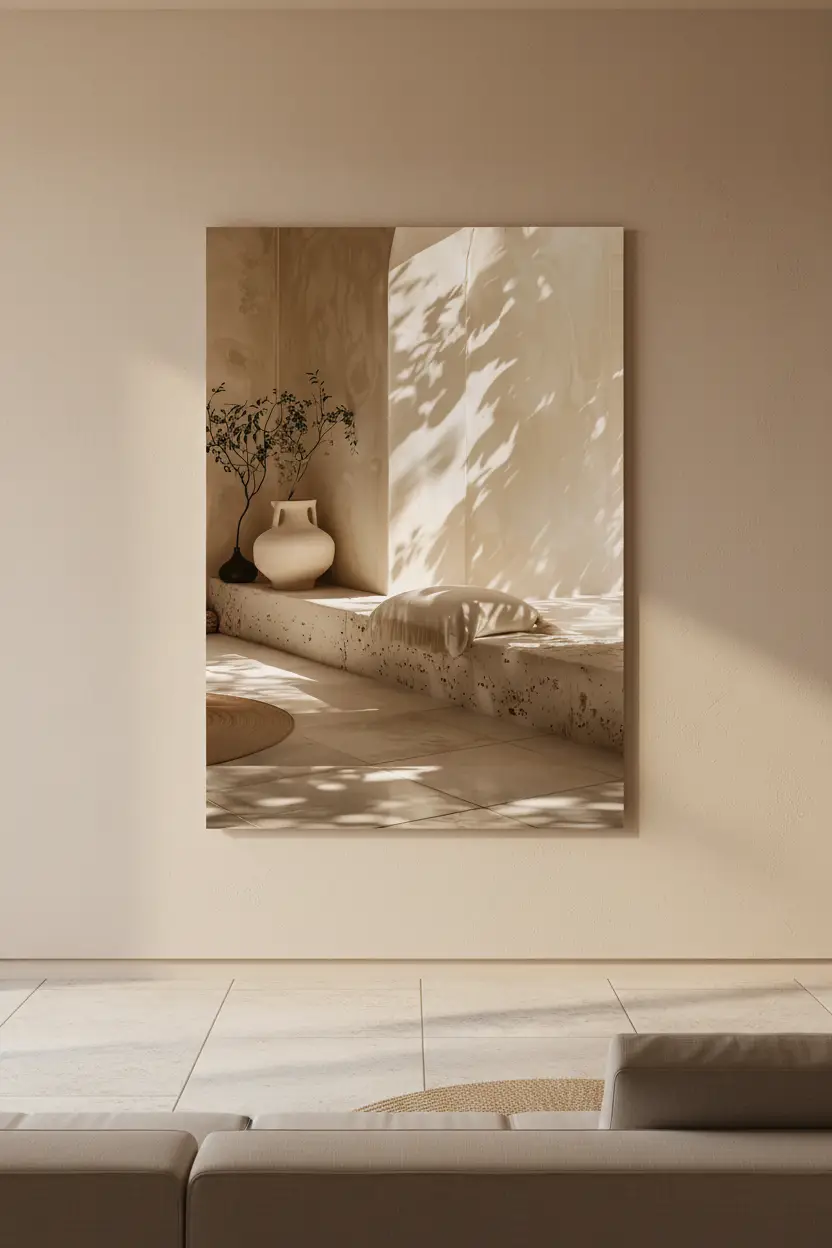
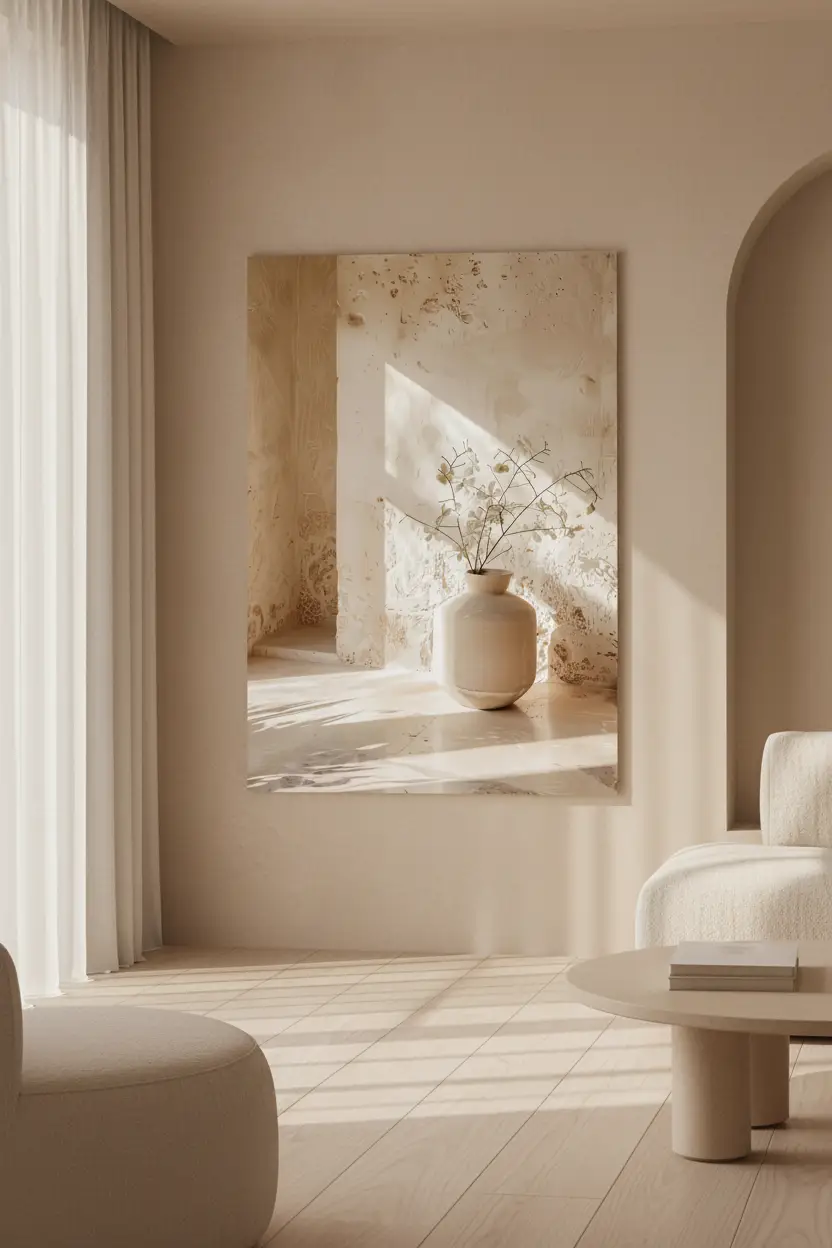
- Sand or ivory background: choose a poster in the same warm neutral tones — travertine texture, limewash plaster, raking light. The poster blends into the wall and creates a subtle depth. Our Travertine Living Room is ideal in this case.
- Off-white background: you can introduce a slightly more contrasted poster — a cast shadow, a dark vase, a graphic plant. Our The Shadow of the Vase creates that perfect soft contrast.
- Terracotta accent in the room: choose a poster in ivory or sand tones to balance things out — never a terracotta poster if you already have terracotta accessories.
Discover all of our posters suited to this palette in our collections Beige & Sand Posters, Ivory & Cream Posters and Terracotta Posters.

Discover our Mediterranean wall posters

The mistakes to avoid with the Mediterranean palette
- Too much terracotta: terracotta over a large surface (a whole wall, a sofa) crushes the palette and creates a 1970s effect. Keep it as an accent — a cushion, a vase, a candle.
- Pure white instead of ivory: pure white breaks the warmth of the Mediterranean palette. Always prefer off-white, ivory or a slightly tinted limewash white.
- Mixing too many tones: the Mediterranean palette draws its strength from its consistency. Limit yourself to 3-4 tones maximum per room — sand, ivory, terracotta, and one organic natural as a touch.
- Ignoring the materials: Mediterranean colours only work on the right materials. Terracotta on shiny plastic does not evoke the Mediterranean. Linen, travertine, pale wood, raw ceramic — the materials matter just as much as the tones.
FAQ — Mediterranean colours in decoration
What are the Mediterranean colours in decoration?
Mediterranean colours are organised around three families: the warm neutrals (sand, ivory, off-white, beige), the terracottas (terracotta, ochre, soft rust) and the organic naturals (dusty olive green, midnight blue, stone grey). These tones evoke the materials of the south — limewash, travertine, terracotta, linen — and create warm, timeless interiors.
How do you use terracotta in a Mediterranean interior?
Terracotta is used as an accent, never as a dominant colour. Limit it to 10-15% of the visual surface: a cushion, a vase, a candle, a pot. Combine it with a sand and ivory base, and choose a wall poster in warm neutral tones to balance it out. Our Minéral collection offers posters perfectly suited to a terracotta interior.
Which wall poster should you choose for a Mediterranean palette?
For a sand and ivory Mediterranean palette, choose posters in the same warm neutral tones — mineral textures, raking light, natural materials. Our Light on Plaster and our Travertine Living Room are the signature posters of this palette.
Can you mix sand, ivory and terracotta in the same room?
Yes — it is in fact the ideal combination of Mediterranean decor. Sand and ivory form the base (walls, floor, large textiles), and terracotta comes in as an accent (accessories, cushions). Limit yourself to these 3 main tones and add a touch of olive green or pale wood to anchor the palette in the nature of the south.
Discover the ideal poster for every room: living room, bedroom, entryway and bathroom.
→ Minéral collection — travertine, plaster, stone and sand
→ Lumière collection — raking light, golden reflections
→ Light on Plaster — the signature sand and ivory poster
→ Travertine Living Room — Mediterranean warmth



Leave a comment
This site is protected by hCaptcha and the hCaptcha Privacy Policy and Terms of Service apply.