
Natural Materials in Mediterranean Decor | Cassili-home
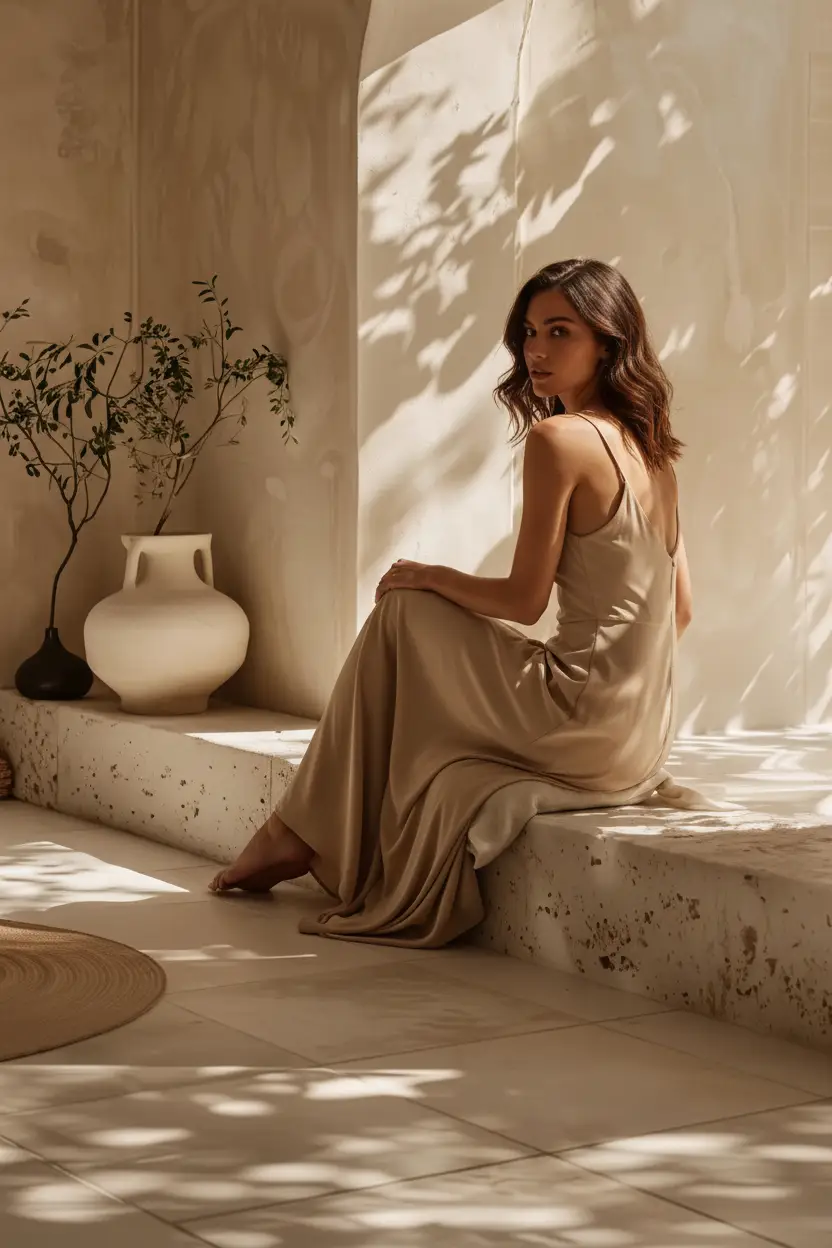
Natural Mediterranean decor rests above all on materials. Raw linen, limestone, pale wood, artisan ceramics — these natural Mediterranean materials have a history, a texture, a unique way of catching light and giving it back.
Reading time: 6 min
Linen and natural textiles: the softness of the south
Linen is the textile material par excellence of natural Mediterranean decor. As a sheer curtain, it filters the light without blocking it — creating that raking golden light effect that is so characteristic. Our Présences collection offers prints that evoke these textile textures with subtlety.

Stone, travertine and lime plaster: the mineral materials of the south
Stone is the founding material of Mediterranean architecture. Lime plaster is perhaps the most evocative material of all. Explore our Minéral collection for prints that speak perfectly to these raw materials. To go further, read our article on modern Mediterranean decor.

Pale wood and ceramics: the artisan materials of the Mediterranean
Pale wood — natural oak, ash, pine — is the furniture material of natural Mediterranean decor. Artisan ceramics play the role of the accent. Our Végétal collection offers prints that evoke Mediterranean nature and go perfectly with these materials.

How to pair natural materials with Mediterranean wall art
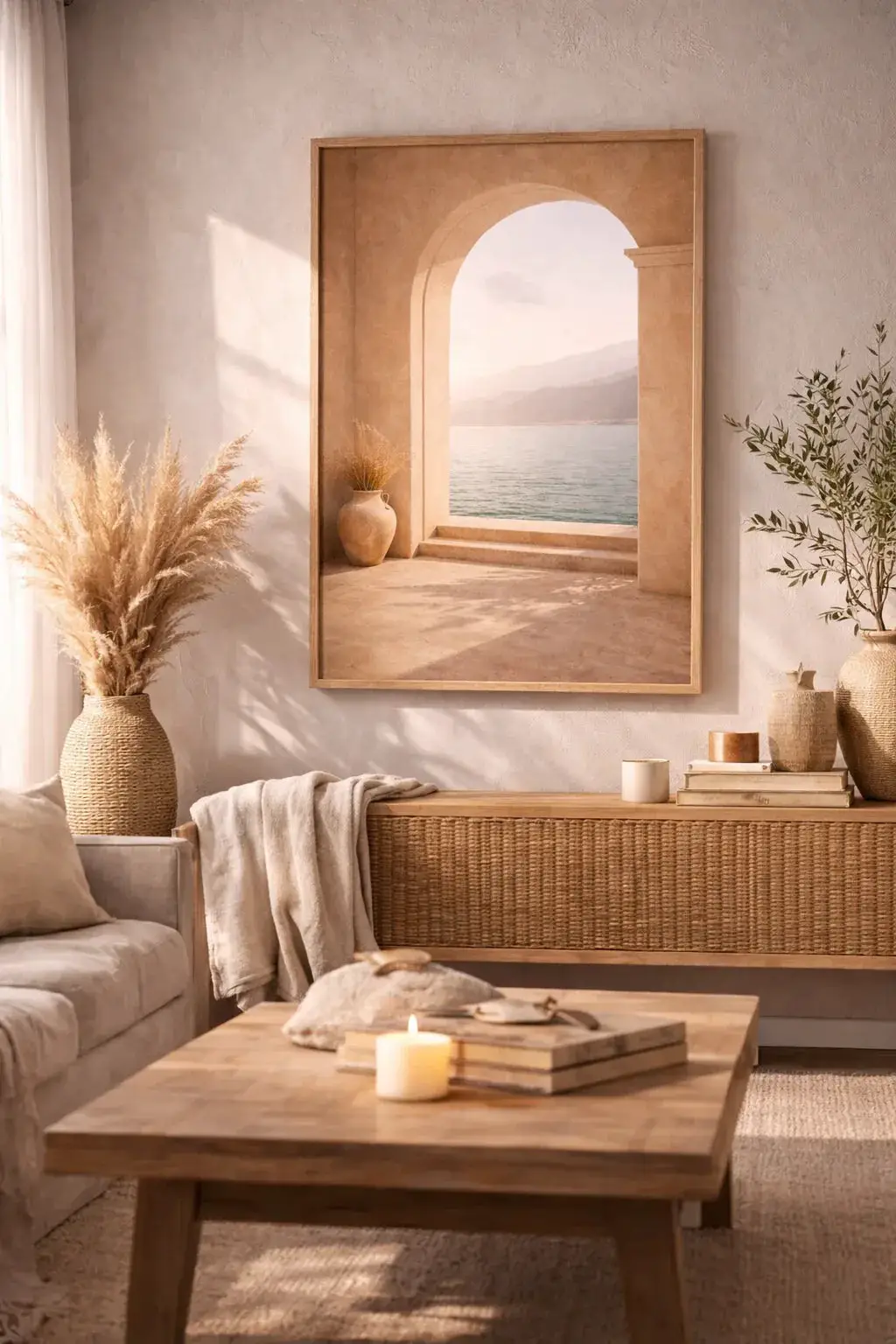
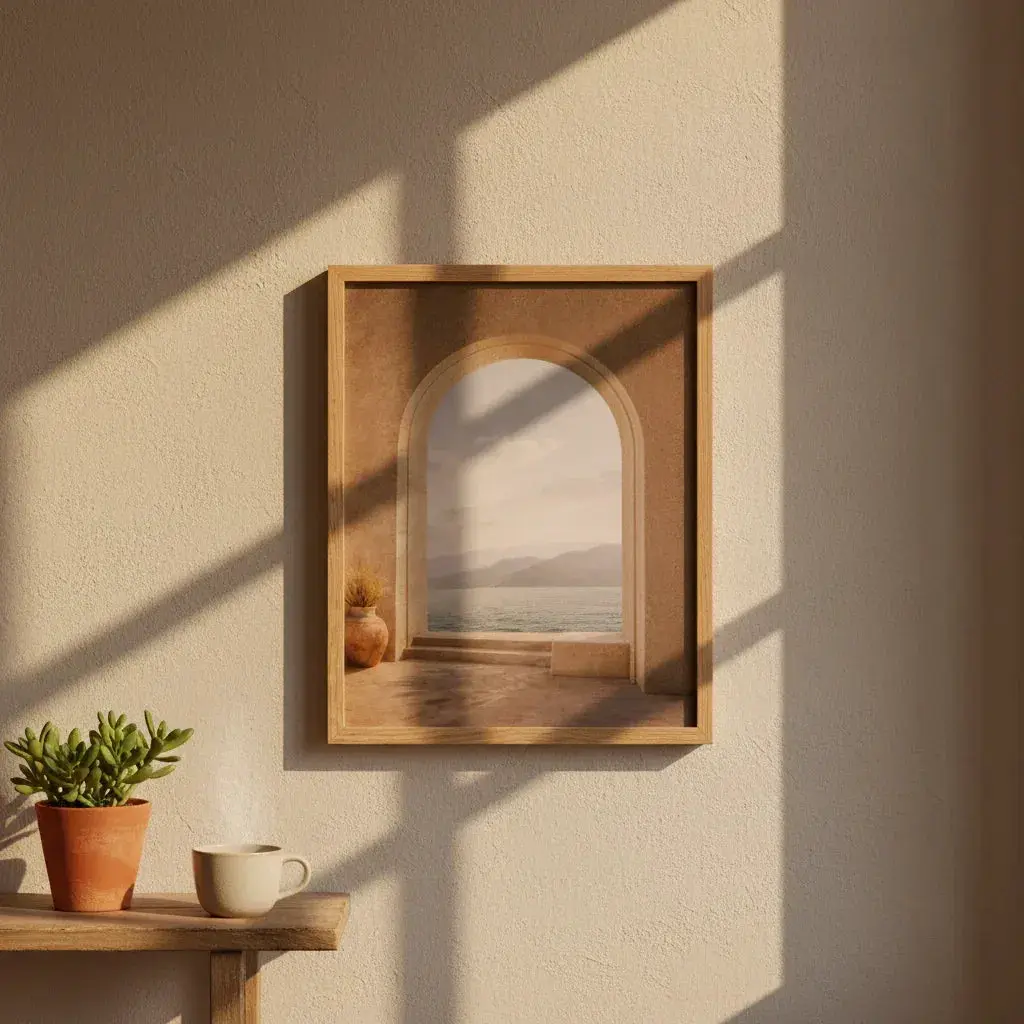
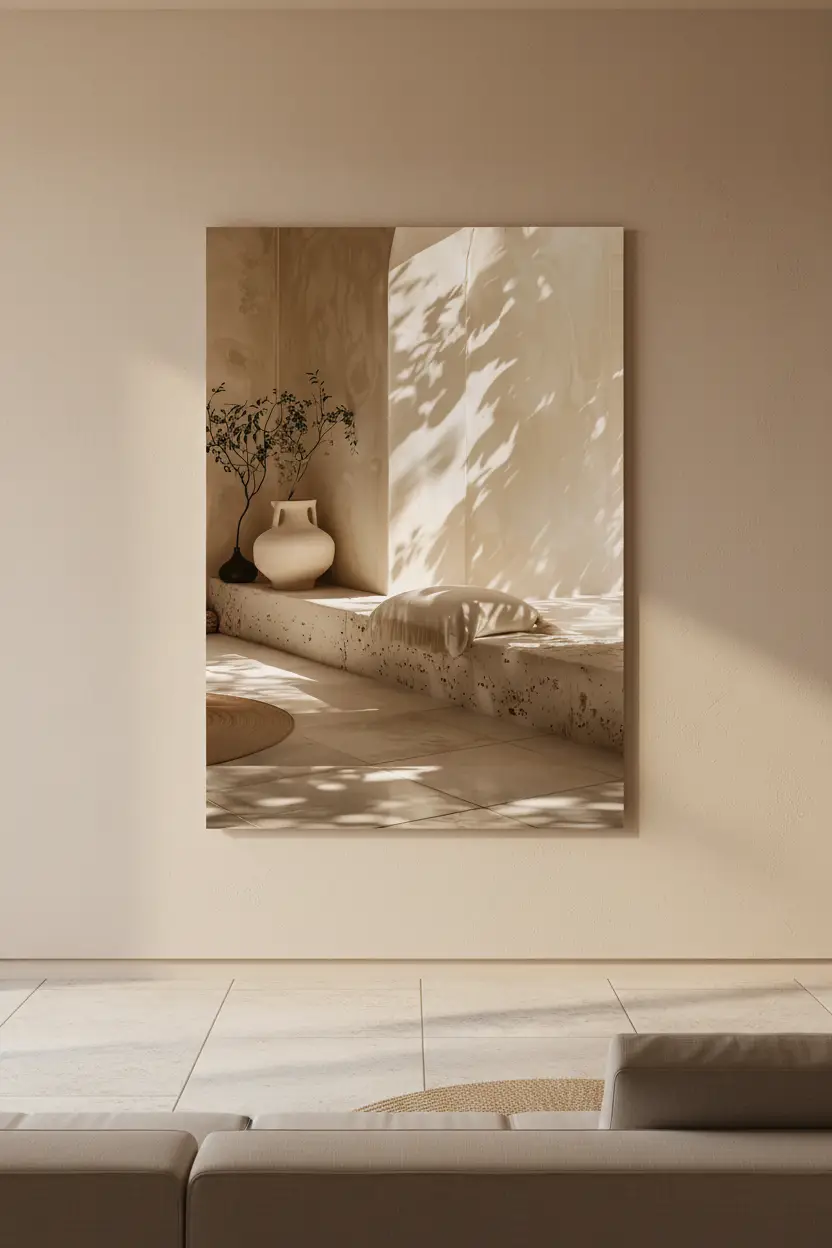
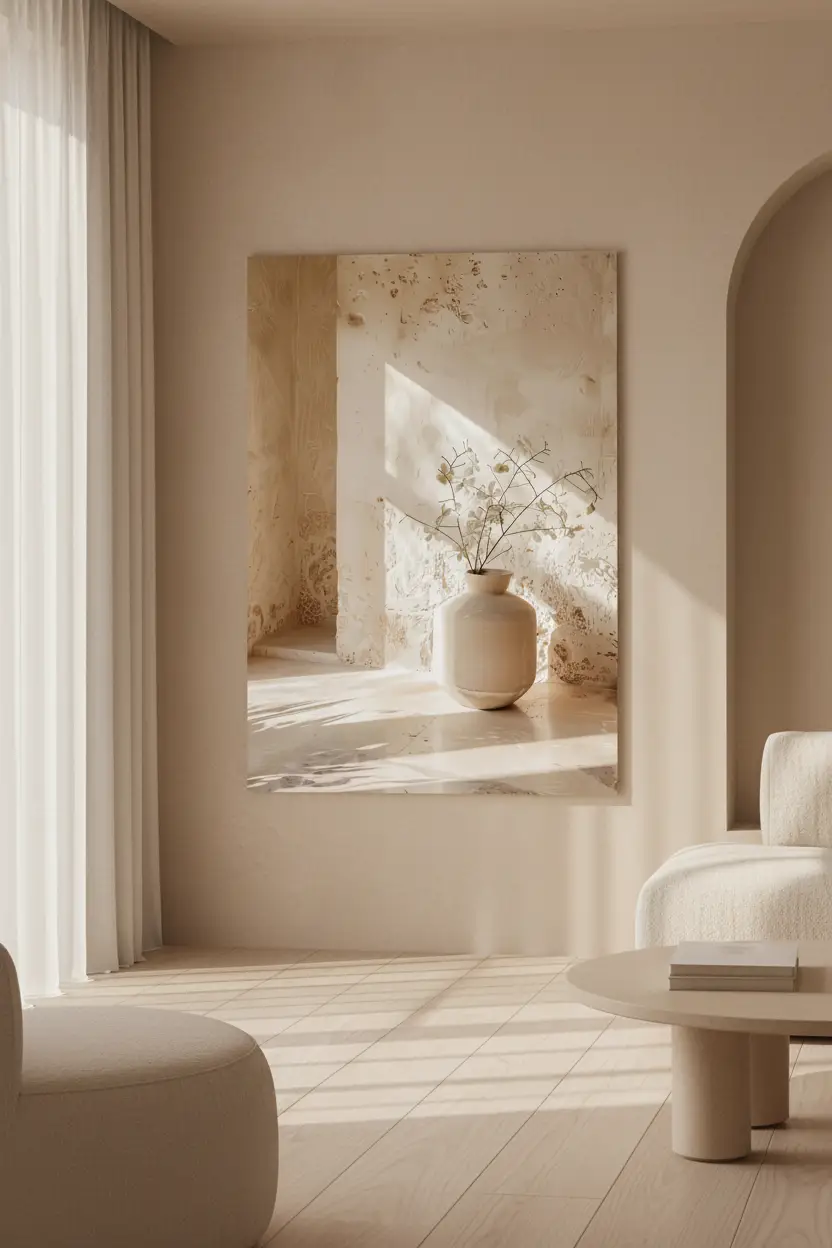
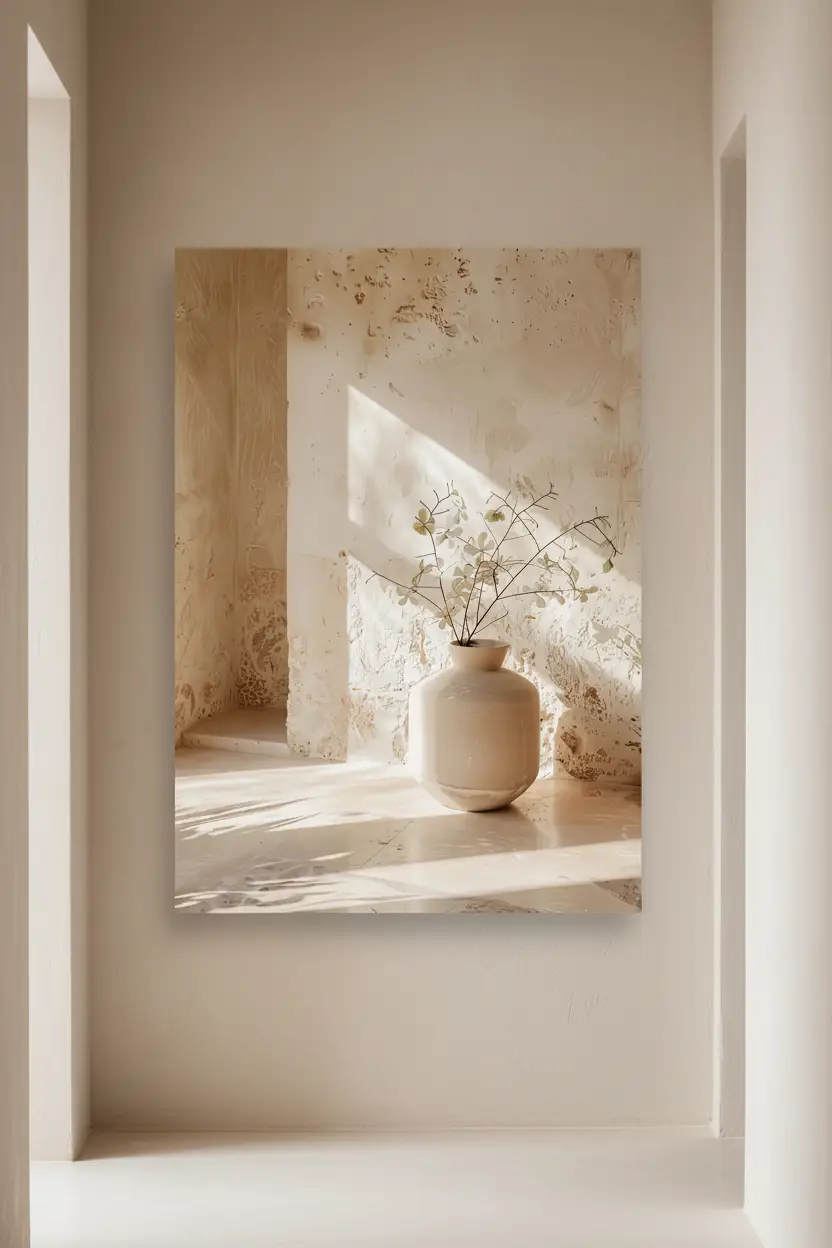
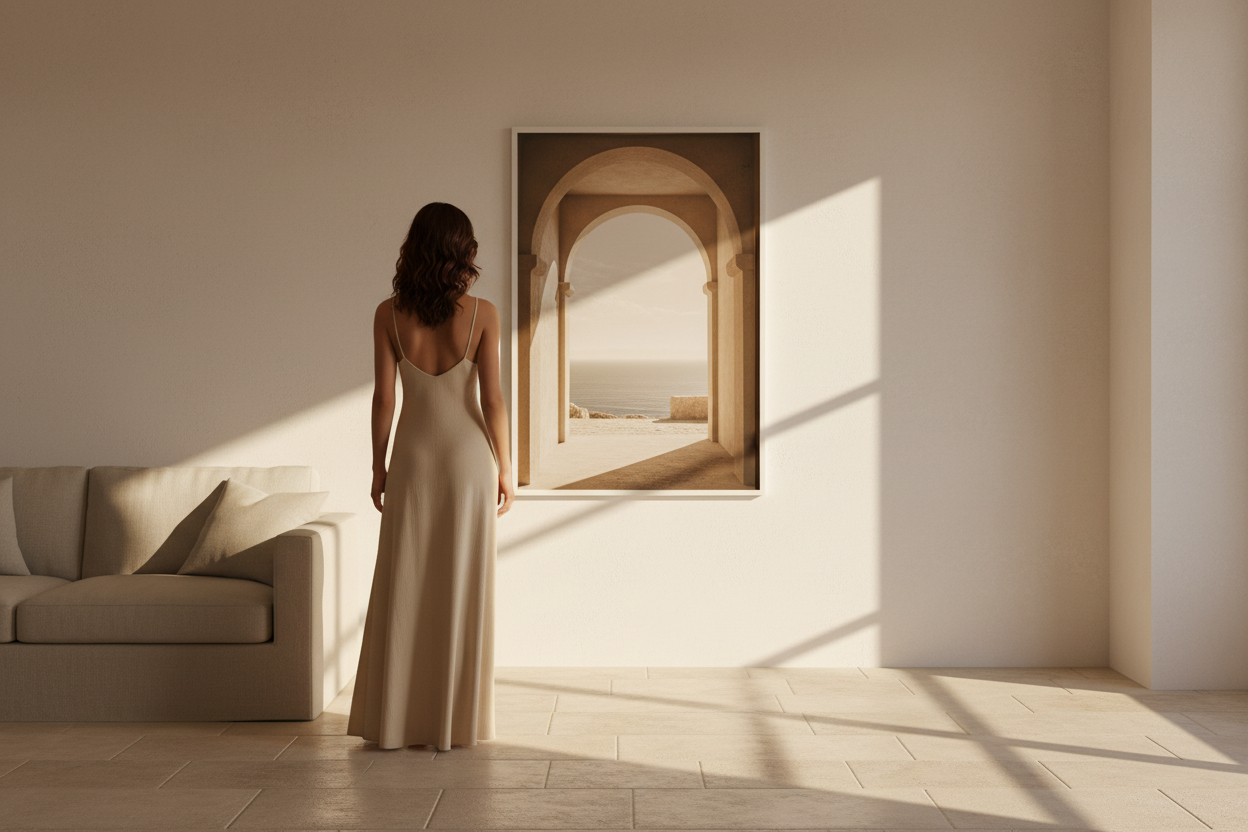
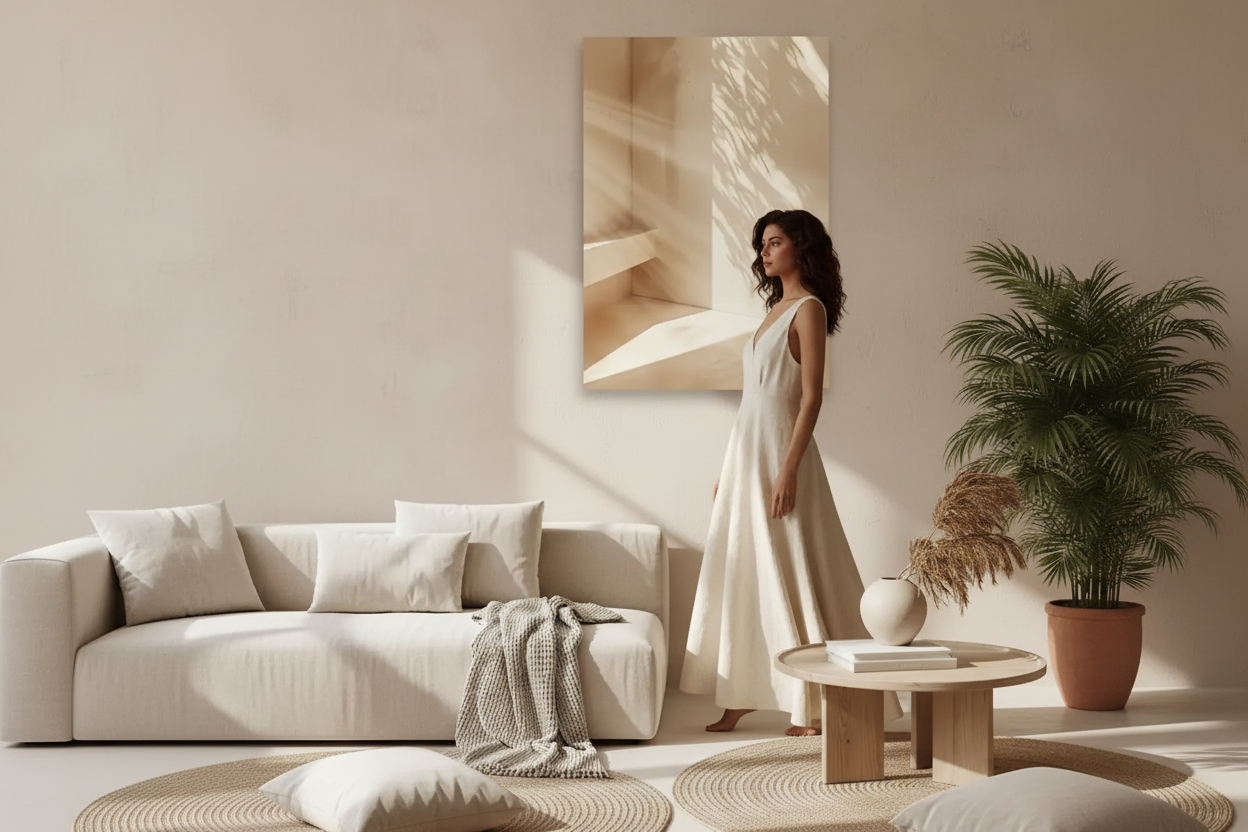
A print with mineral textures on a lime-plastered wall creates a striking visual continuity. Our Architecture collection and our Minéral collection offer prints designed to speak to natural Mediterranean materials. To choose the right print, see our guide on how to choose your wall art print according to the room.

Travertine, the star material of Mediterranean decor
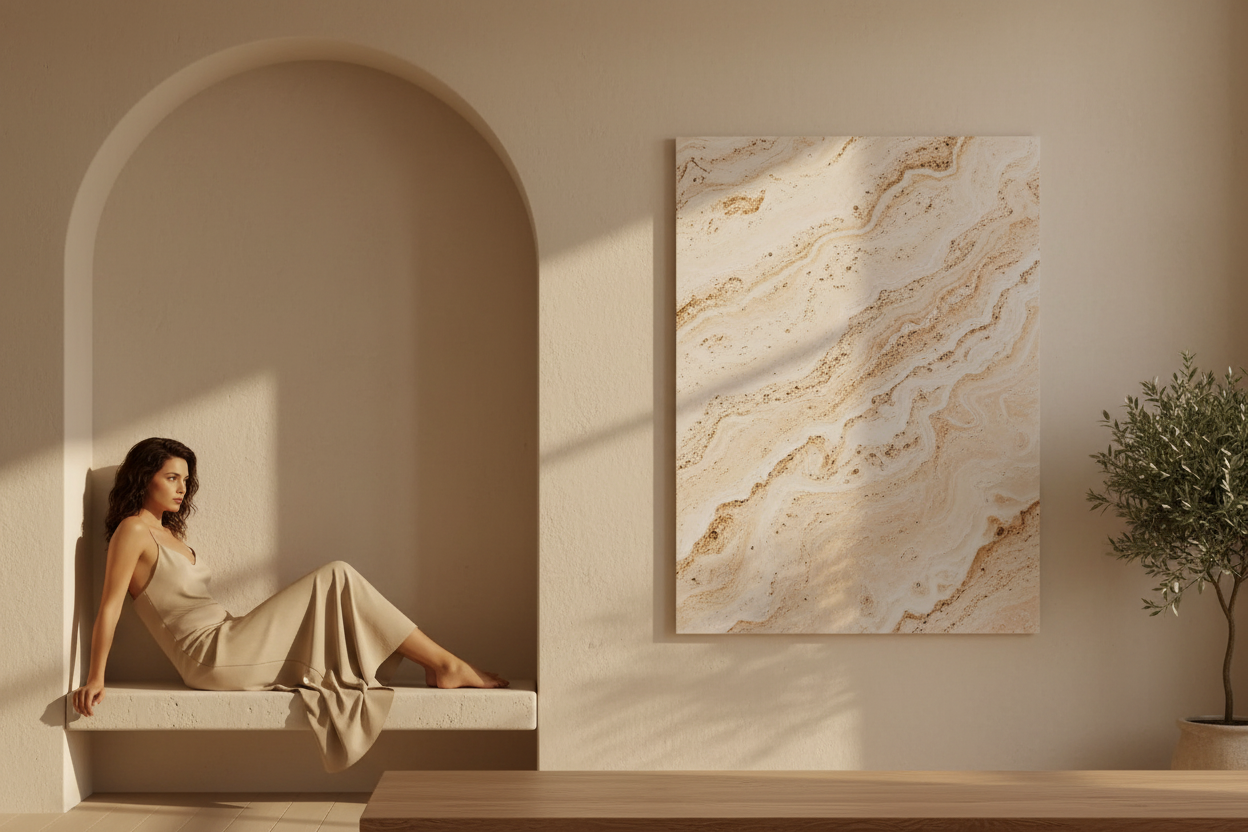
Among all the mineral materials, travertine has established itself as the signature of contemporary Mediterranean decor — floors, worktops, furniture, accessories. Its veined texture, its warm tones and its soft light make it a material apart. As a print, a travertine composition brings that same organic warmth without the cost or the weight of real stone. To understand everything about this material, read our article on travertine in decoration: why natural stone is back in force.
Pairing materials without overloading
The key to a successful Mediterranean decor is restraint. Three well-chosen materials are worth more than ten. Combine a mineral material (stone, plaster), a textile material (linen, ecru cotton) and a warm material (pale wood, rattan) — and let it all breathe. Avoid multiplying patterns and colours: the modern Mediterranean is understated.
Caring for natural materials and prints
Natural materials age well provided they receive simple care: regular dusting, protection against humidity for porous stone, nourishing wax for pale wood. Your prints deserve the same attention — kept away from direct light and humidity. Find our advice in caring for your wall art prints: preserving the brilliance of your prints.
Frequently asked questions
Which natural materials for a small space?
In a small space, favour pale, reflective materials: ecru linen, blond wood, pale lime plaster. They diffuse the light and visually enlarge the room, where dark materials close it in.
How do you mix several natural materials?
Keep a common colour temperature: warm materials together (honey wood, terracotta, sand linen). Vary the textures instead — smooth against raw, matte against satin — rather than the shades, for a rich but coherent result.
Which print goes with pale wood?
Pale wood calls for prints in sand, ivory and beige tones, or soft botanical and mineral designs. Avoid contrasts that are too cool: the warmth of the wood asks for an image in the same colour family.
Bring natural materials in room by room: living room, bedroom, entryway, spa bathroom and grounded office.
→ Architecture Collection
→ Minéral Collection
→ The Olive Tree Corner


Leave a comment
This site is protected by hCaptcha and the hCaptcha Privacy Policy and Terms of Service apply.