
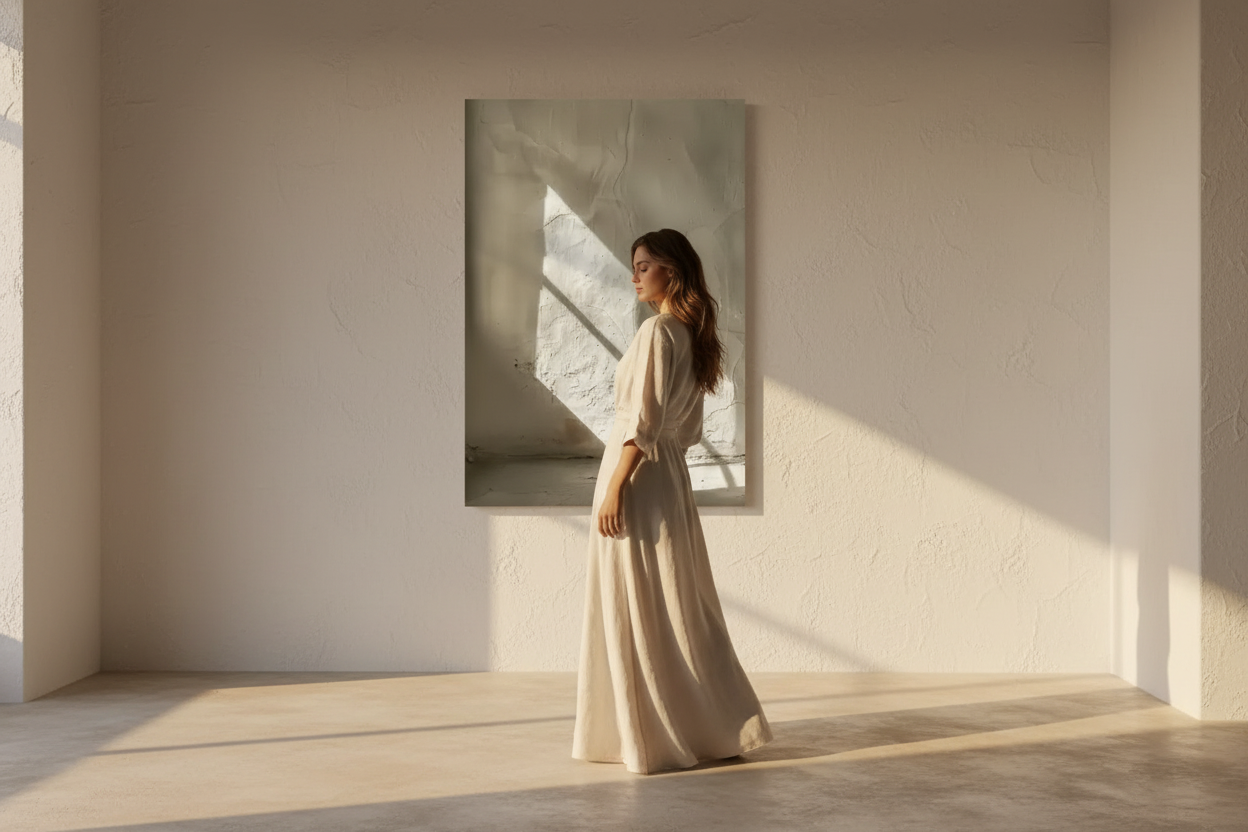
Minimalist Poster Prints — How to Choose Art for a Calm, Elegant Home
Minimalist poster prints are one of the most effective ways to bring personality and calm into a home without overwhelming it. The best minimalist prints don’t shout — they settle. They create a focal point, anchor a palette, and give a room a sense of intention. But choosing the right one requires more than picking something that looks good on a screen.

What makes a poster truly minimalist?
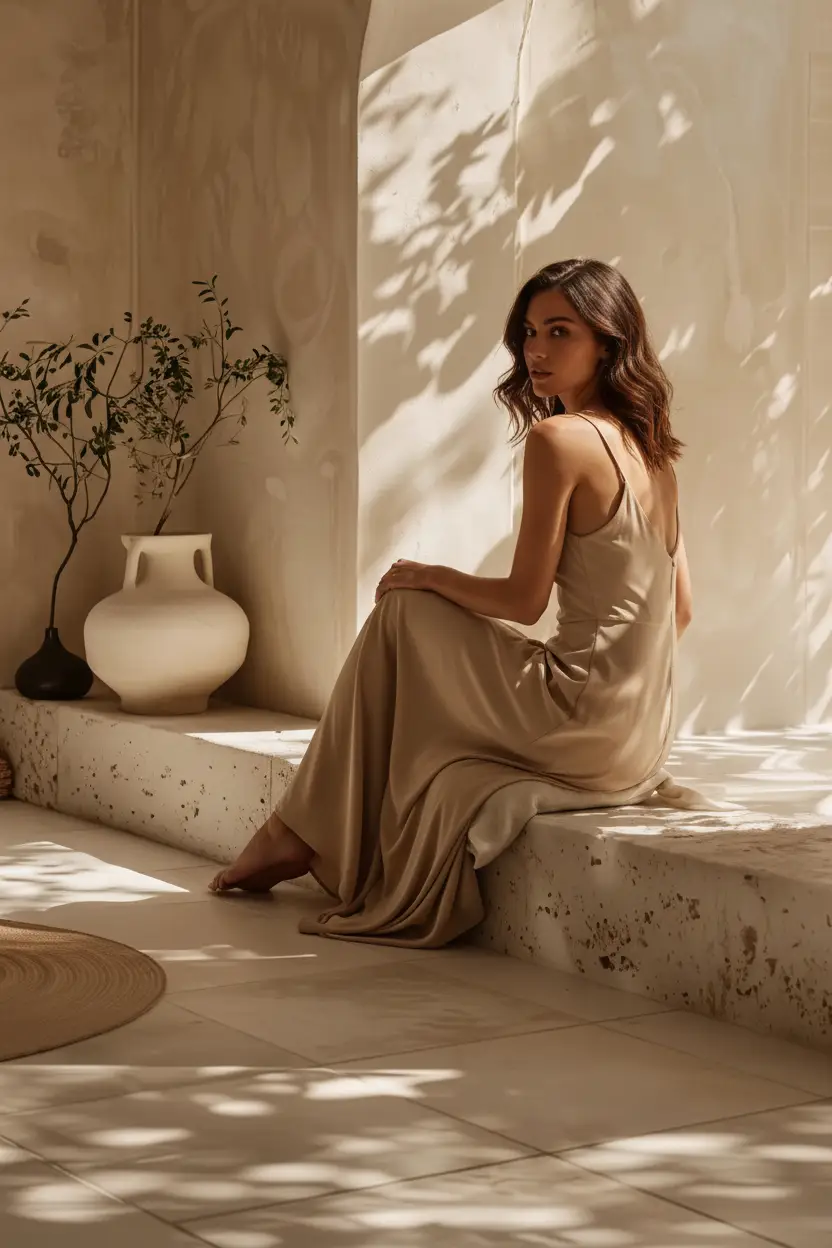
A minimalist poster is defined not by what it shows, but by what it leaves out. The composition is simple — one subject, one light source, one dominant tone. The palette is restrained: sand, ivory, warm white, soft stone. The negative space is generous. Nothing competes for attention.
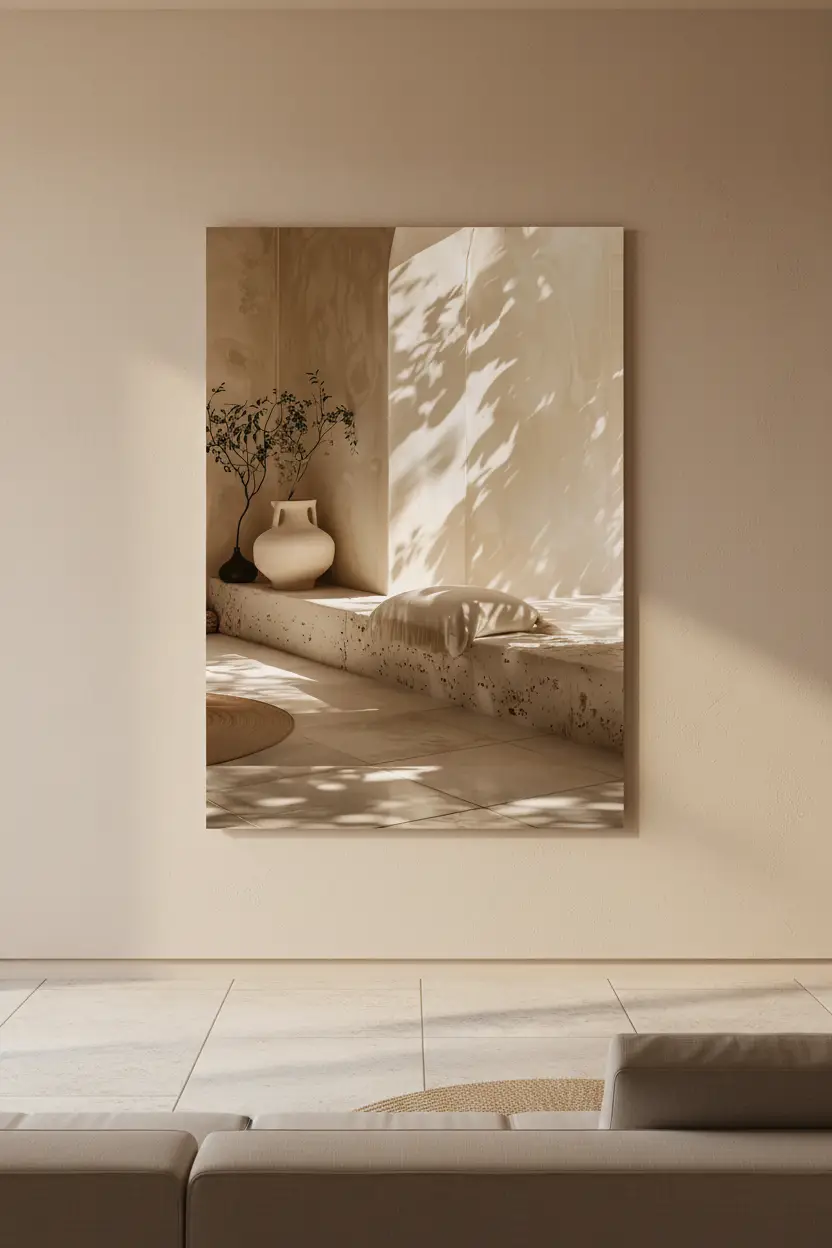
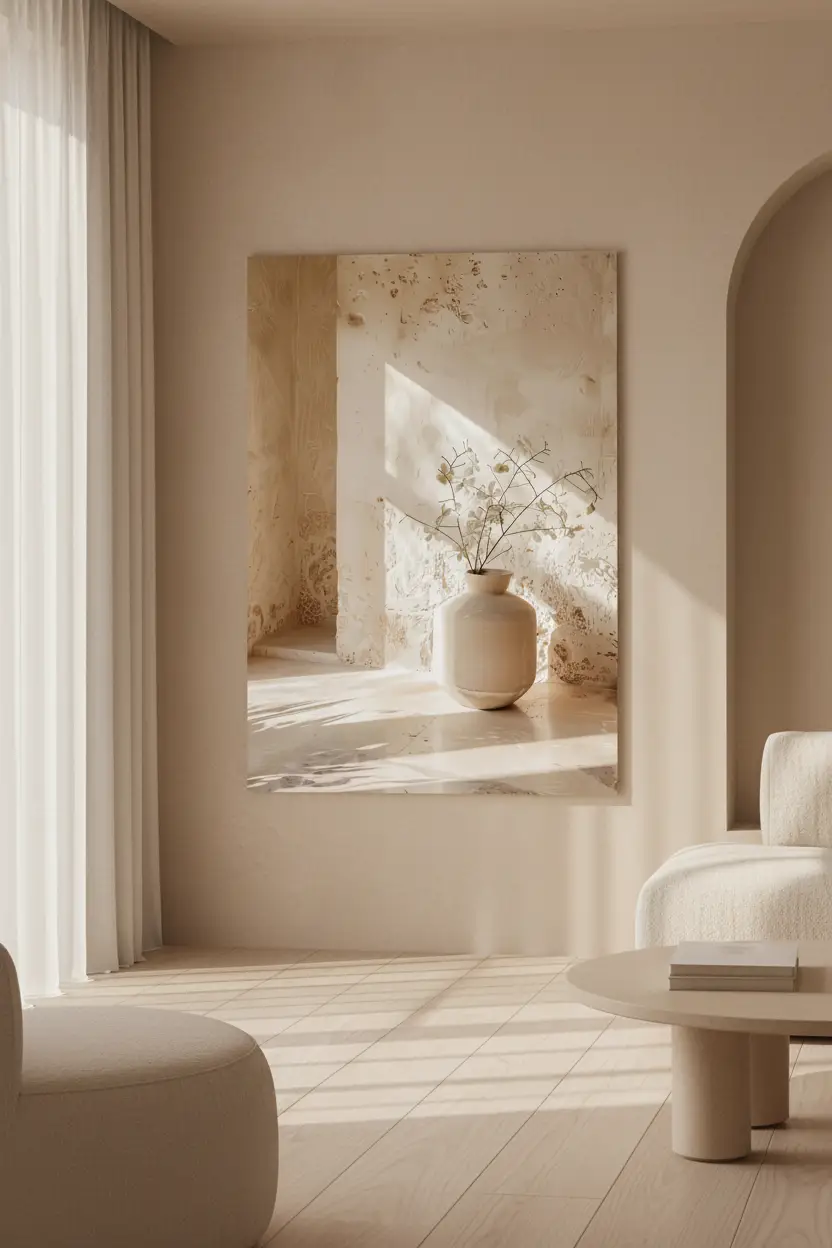
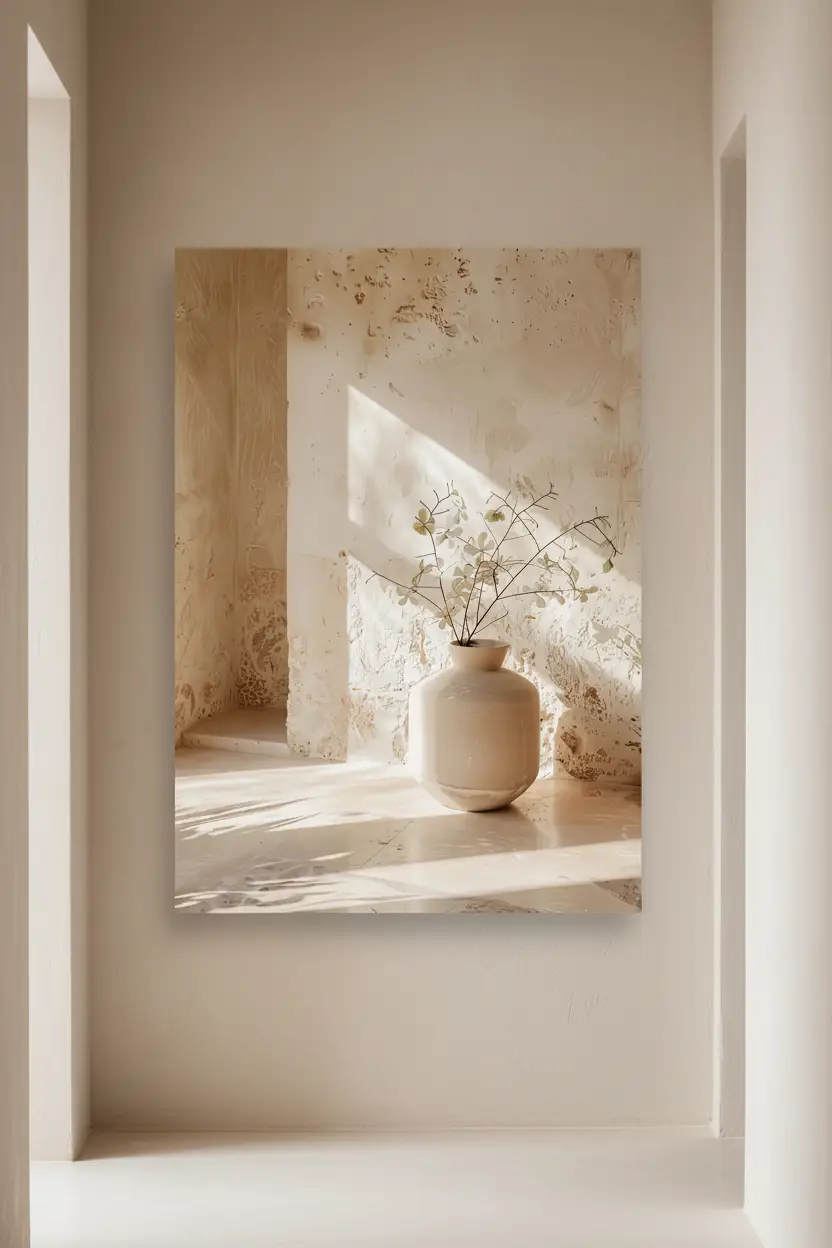
Our Minéral collection is built on this principle — shadow studies, stone textures, and light compositions that hold their own on a wall without demanding constant attention. Diagonal Shadow is one of our most quietly powerful prints: a diagonal of window light on an enduit wall, nothing more.

Figurative vs abstract minimalist prints
Minimalist prints fall into two broad categories: figurative (a face, a figure, a recognizable subject rendered with restraint) and abstract (texture, light, form without a clear subject). Both work well in calm interiors, but they create different atmospheres.
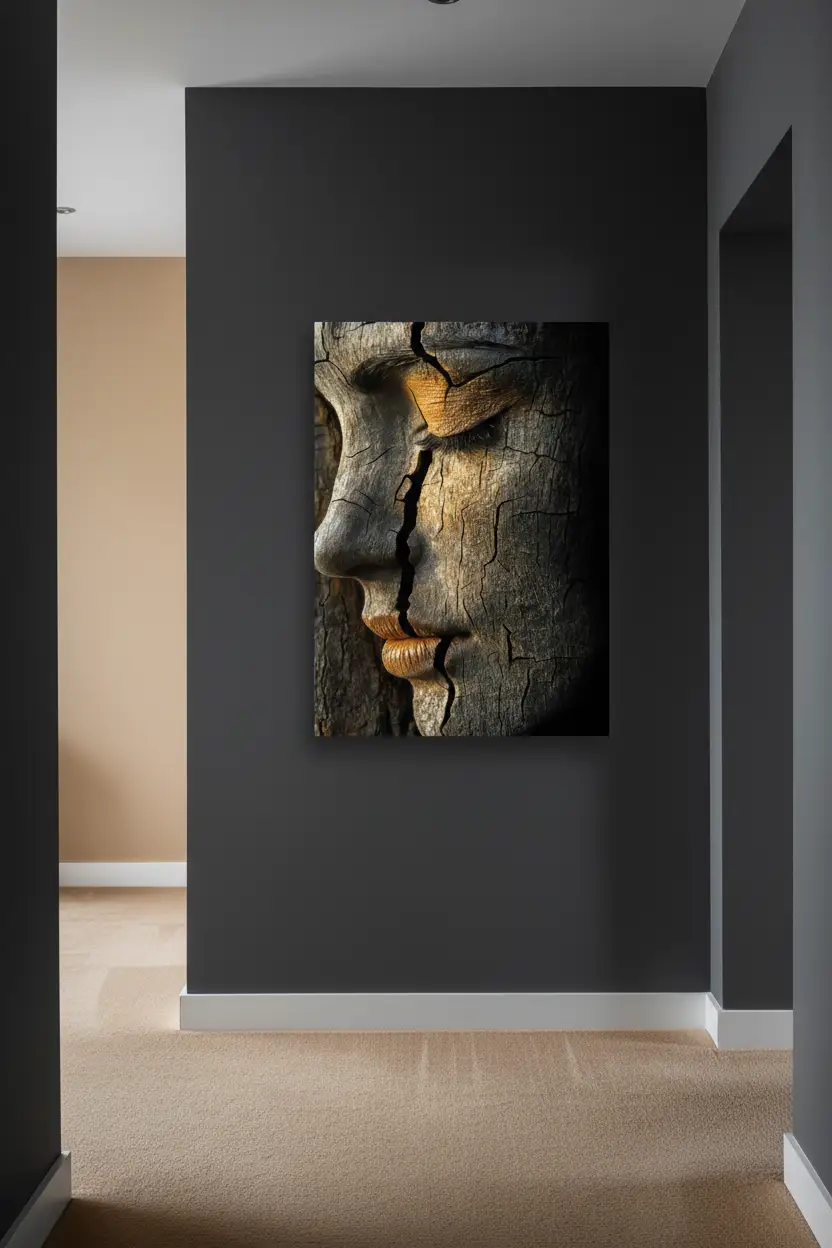
Figurative minimalist prints — like The Desert Child, a feminine face emerging from a sand dune — bring a human presence to a room without the intensity of a portrait. Abstract prints, like our Lumière collection, create atmosphere through light and texture alone. For bedrooms, figurative prints tend to feel more intimate; for living rooms and offices, abstract compositions are often more versatile.

Choosing the right format
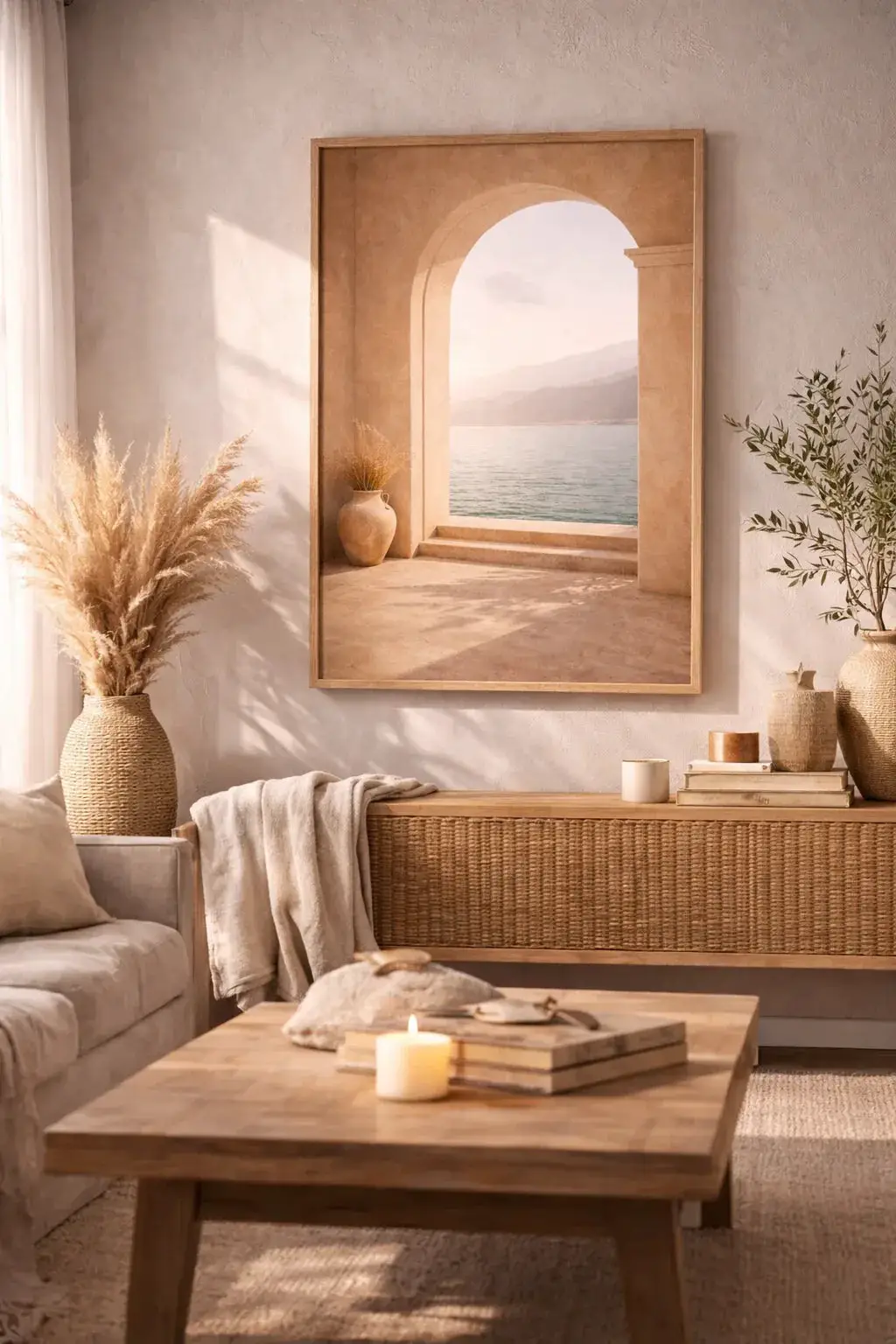
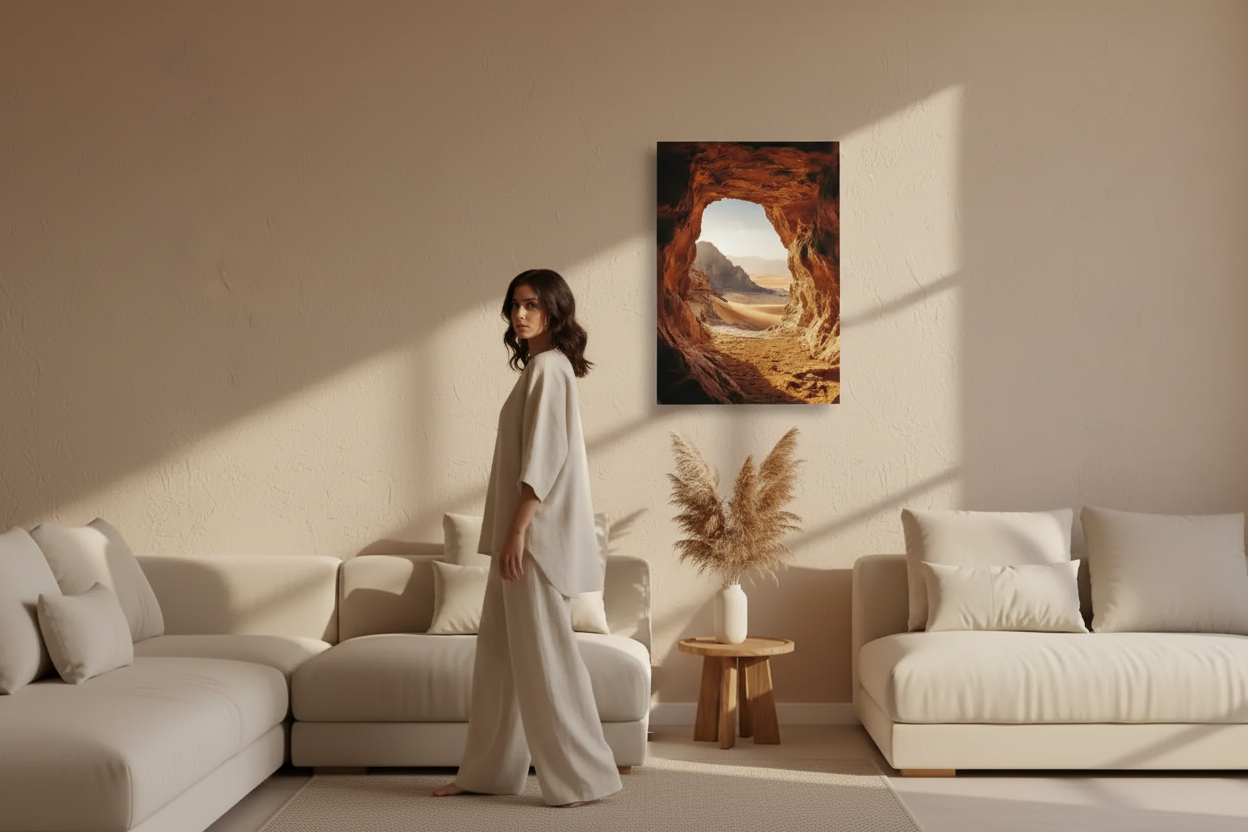
Format is as important as subject matter in minimalist interiors. A print that is too small loses its impact; a print that is too large can overwhelm a carefully balanced room. As a general rule: above a sofa, go for A1 or 50×70 cm. In a bedroom above the headboard, 50×70 cm or A2. In a home office or study, a single A2 or 30×40 cm print is usually enough.
For botanical compositions, The Ivory Leaves — a close-up of dried ivory leaves in warm light — works beautifully in vertical format in a home office or narrow wall. Explore more in our Végétal collection for botanical minimalist prints.
Framed or unframed — the minimalist answer
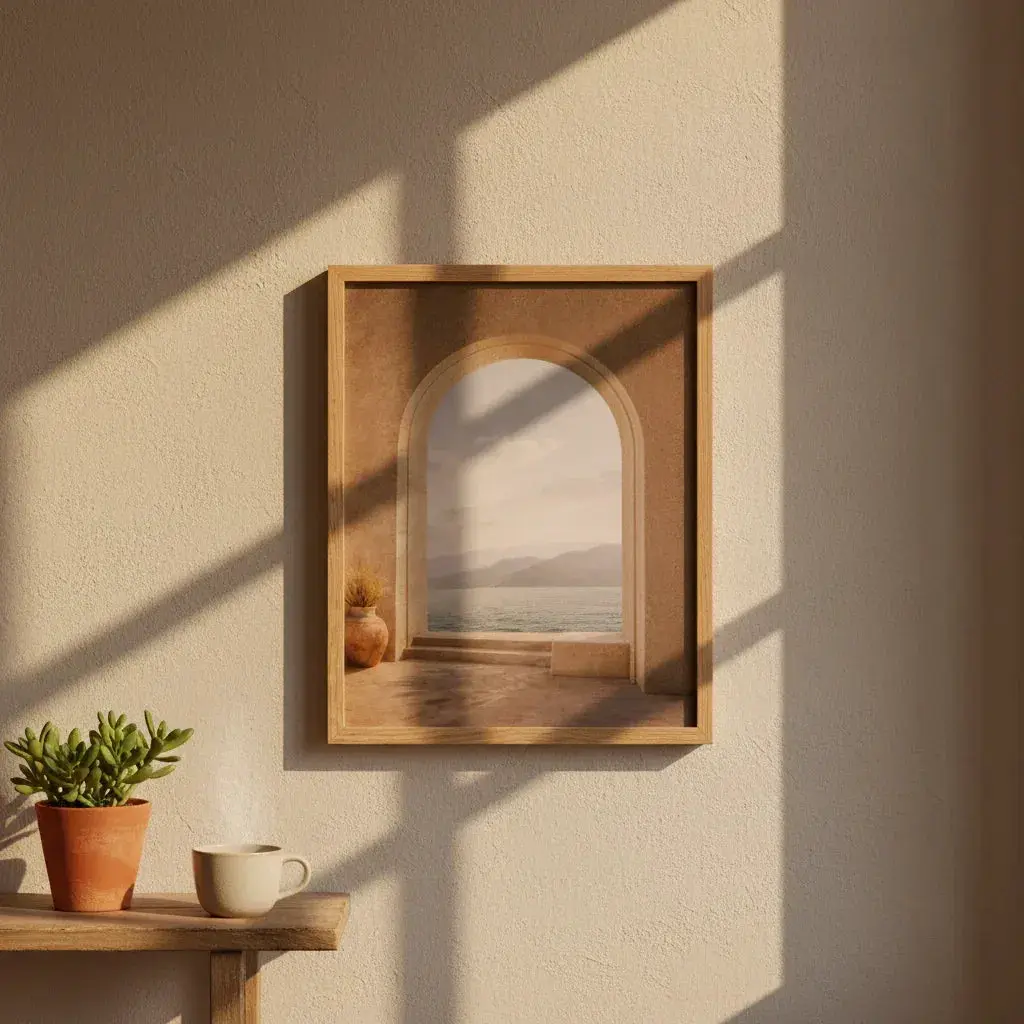
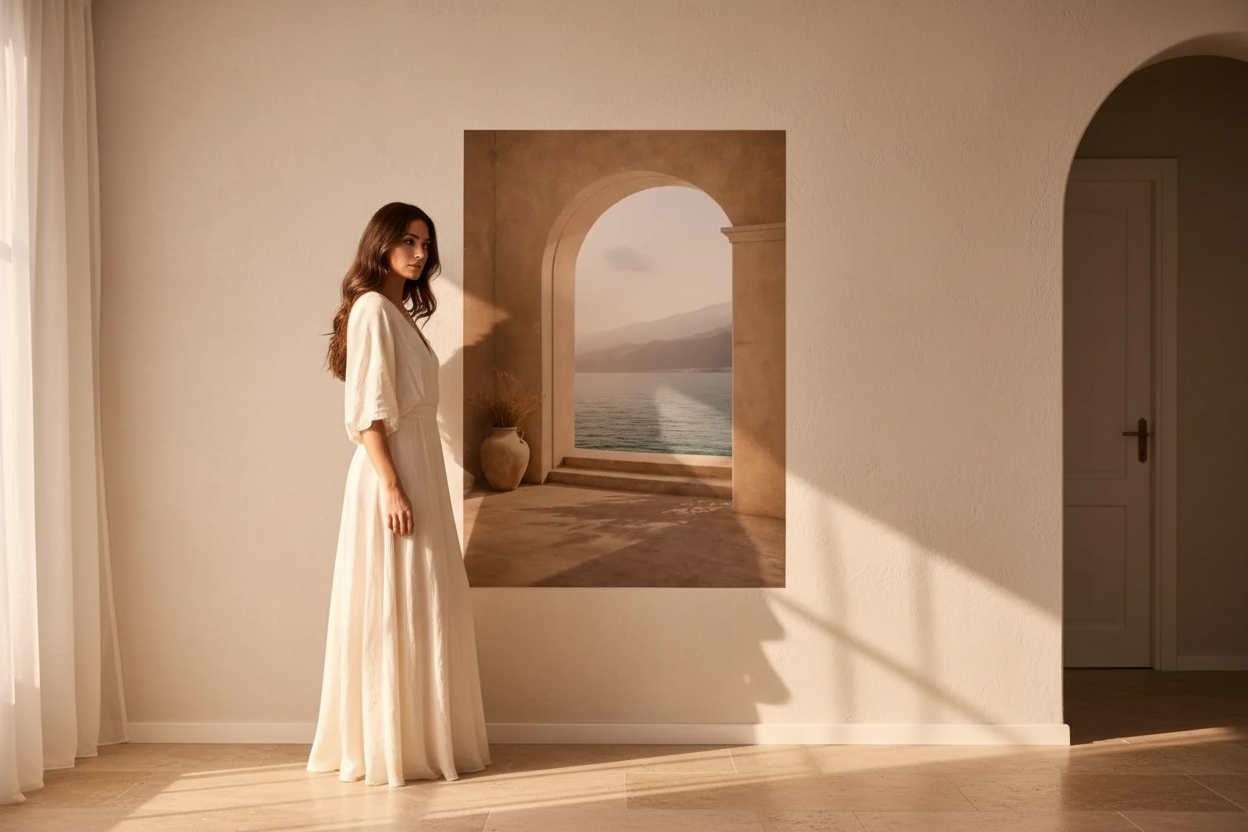
In a truly minimalist interior, the unframed poster is often the stronger choice. Flush against the wall, the print becomes part of the architecture rather than an object hanging in front of it. If you prefer a frame, choose the thinnest possible natural oak profile — it adds warmth without adding visual weight. Avoid thick frames, ornate mouldings, or any frame that draws more attention than the print itself.
Discover our full range of presence and figure prints and all minimalist poster prints organized by theme.
The mistakes to avoid
- Choosing a print that’s too small — in a minimalist interior, a small print on a large wall looks timid rather than restrained. One strong print at the right scale is always more effective.
- Mixing too many styles — a figurative print next to an abstract next to a typographic print creates noise. Stick to one visual language per room.
- Ignoring the wall color — a warm sand print on a cool gray wall will always look slightly off. Match the tonal temperature of your print to your walls.
- Over-framing — a heavy frame on a minimalist print defeats the purpose. If in doubt, go unframed.
Shop minimalist poster prints →

FAQ — Minimalist Poster Prints
What is the difference between a minimalist print and a decorative print?
A minimalist print is defined by restraint: one subject, one dominant tone, generous negative space, and a composition that holds its own without competing with the room. A decorative print tends to be more complex — more colors, more detail, more visual information. In a calm, neutral interior, minimalist prints almost always work better because they add presence without adding noise.
What size minimalist poster should I choose for a living room?
For a standard living room above a sofa, A1 (59×84 cm) or 50×70 cm is the most effective size. The print should cover roughly two-thirds of the sofa’s width when viewed from across the room. In a minimalist interior, one large print is almost always more impactful than a gallery wall of smaller prints.
Should minimalist prints be framed or unframed?
Both work, but in a truly minimalist interior, the unframed poster — flush against the wall — is often the stronger choice. It integrates into the architecture rather than sitting in front of it. If you prefer a frame, choose the thinnest natural oak profile available and avoid any frame that draws more attention than the print itself.
How do I choose between a figurative and an abstract minimalist print?
Figurative prints (faces, figures, recognizable subjects) bring a human presence and tend to work well in bedrooms and intimate spaces. Abstract prints (light, texture, shadow) create atmosphere and are more versatile across living rooms, offices, and hallways. When in doubt, choose the print that you’d still want to look at every day in five years.


Leave a comment
This site is protected by hCaptcha and the hCaptcha Privacy Policy and Terms of Service apply.