
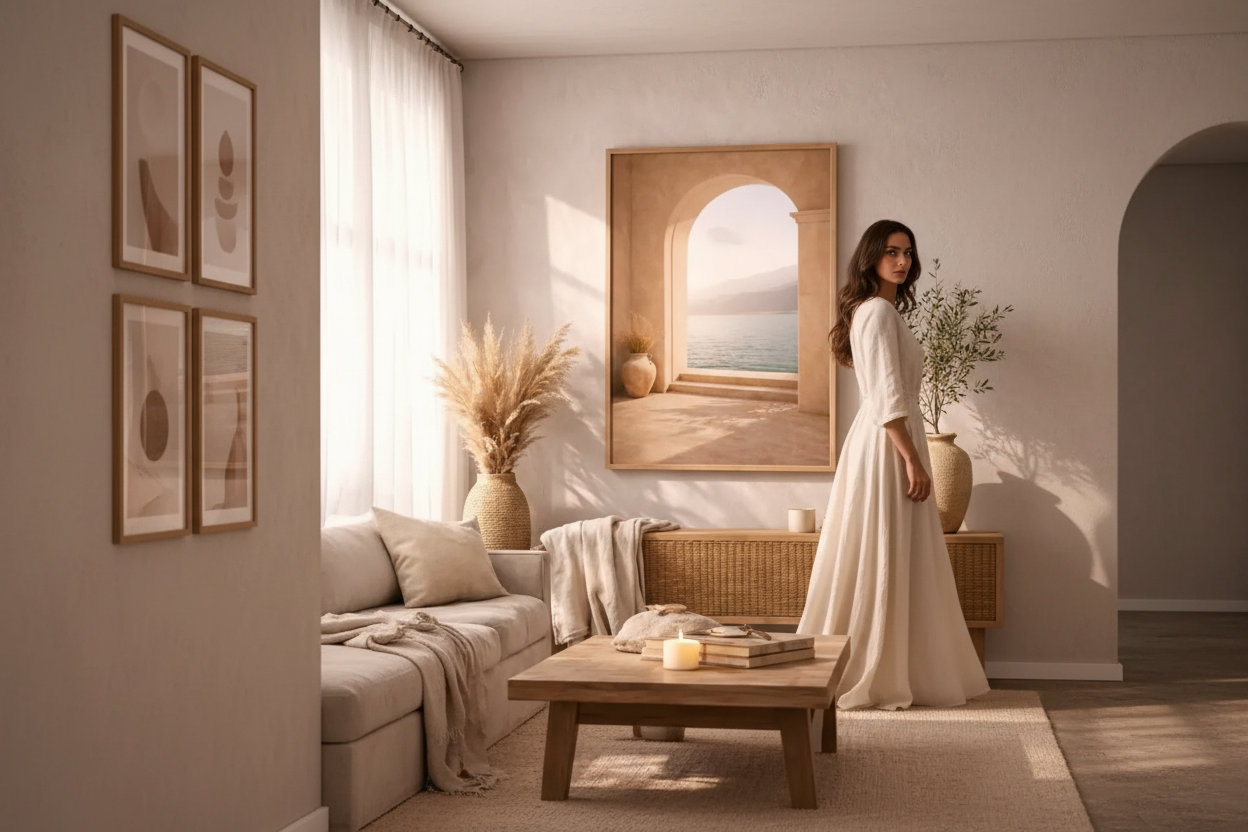
Wie man eine Galeriewand mit neutralen minimalistischen Drucken erstellt
Eine Galeriewand ist eine der persönlichsten und wirkungsvollsten Möglichkeiten, eine leere Wand zu gestalten – aber auch eine der einfachsten, um Fehler zu machen. Zu viele Drucke, zu viele Stile, zu viele Rahmen: Das Ergebnis ist eher visueller Lärm als kuratierte Ruhe. Hier erfahren Sie, wie Sie eine Galeriewand gestalten, die bewusst, zusammenhängend und wirklich schön wirkt.

Beginnen Sie mit einer Palette, nicht mit einem Thema
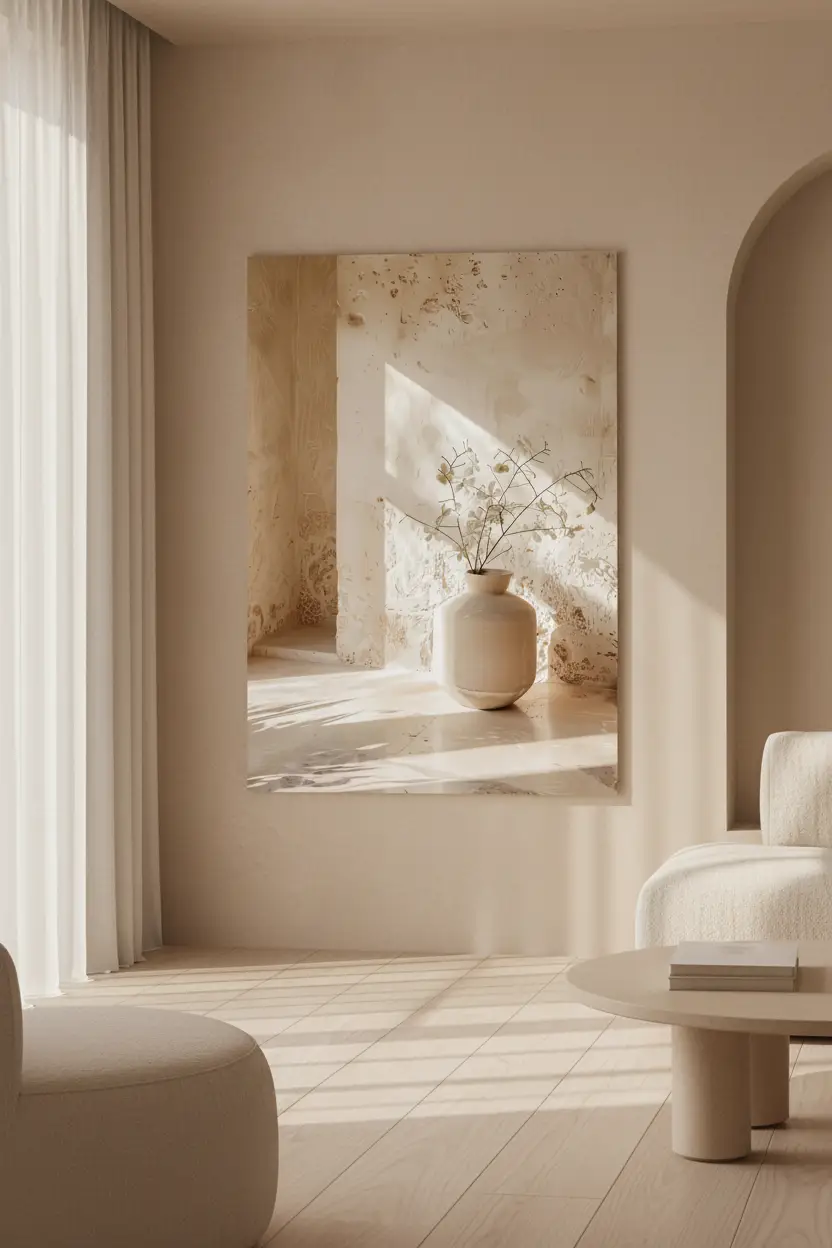
Der häufigste Fehler bei einer Galeriewand ist die Auswahl von Drucken nach einem Thema (Reisen, Botanik, Architektur) statt nach einer Farbpalette. Eine konsistente Palette – alle Drucke in derselben warmen Neutralfamilie – schafft Kohäsion, auch wenn die Motive variieren. Unsere gesamte Wandkunstkollektion ist um eine einzige warme neutrale Palette herum aufgebaut, was es einfach macht, Drucke aus verschiedenen Kollektionen zu mischen, ohne die Kohärenz zu verlieren.
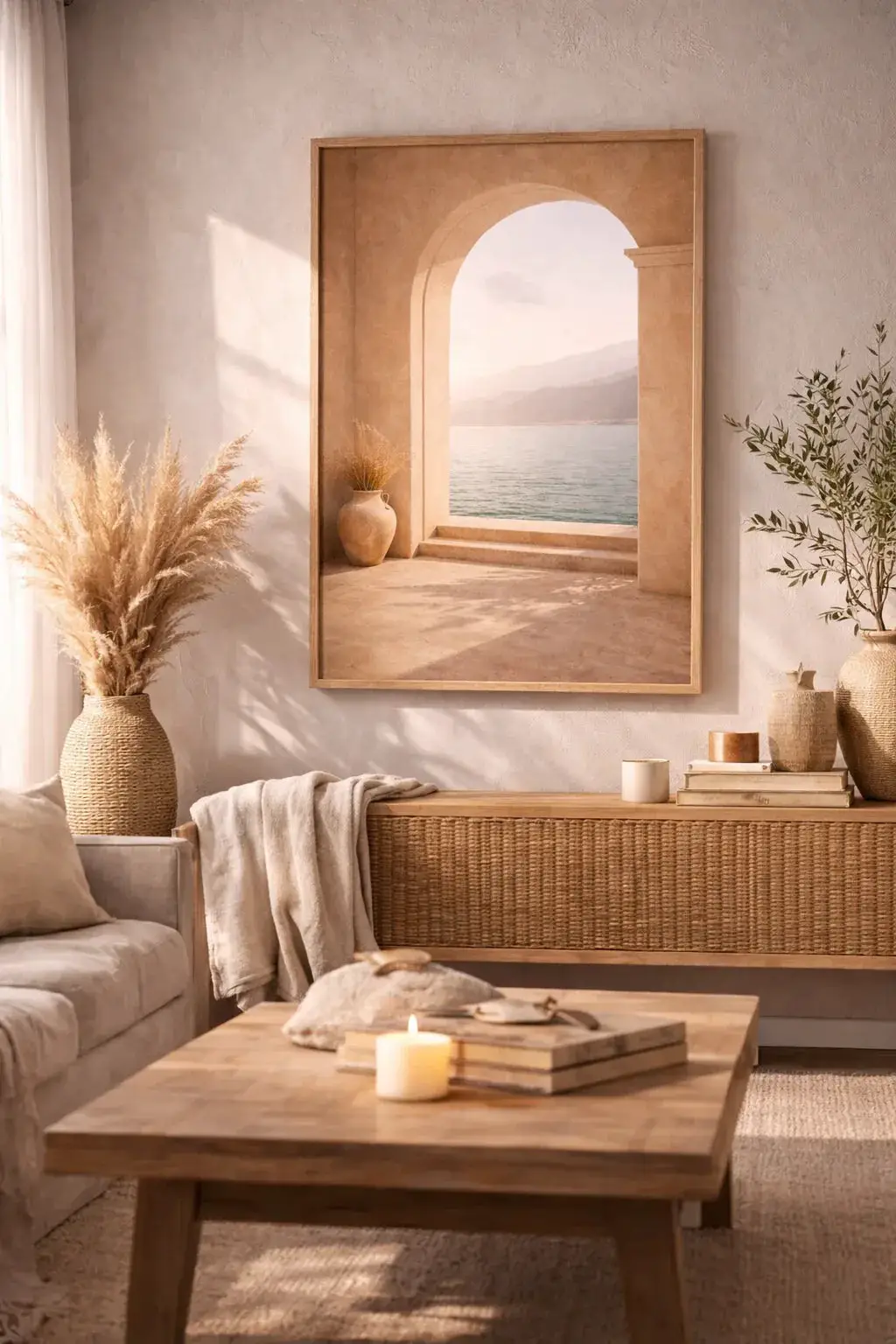
Für eine mediterrane Galeriewand kombinieren Sie Drucke aus unserer Architecture-Kollektion (Bögen, Steinmauern) mit Stücken aus unserer Végétal-Kollektion (Olivenzweige, getrocknete Botanik) – die Palette vereint sie auf natürliche Weise.

Wie viele Drucke?
Drei bis fünf Drucke sind für die meisten Wände optimal. Weniger als drei können spärlich wirken; mehr als fünf bergen die Gefahr, unübersichtlich zu werden. Für eine Sofawand (der häufigste Ort für eine Galeriewand) sind drei Drucke in derselben Größe – horizontal angeordnet – die eleganteste und am einfachsten umzusetzende Lösung. Für eine größere Wand oder ein Treppenhaus eignet sich eine komplexere asymmetrische Anordnung von vier oder fünf Drucken gut.
Ein Duo über einem Bett – zwei Drucke gleicher Größe, symmetrisch aufgehängt – ist eines der effektivsten und am wenigsten genutzten Galeriewandformate. Mediterraner Bogen gepaart mit Der Olivenbaum-Winkel schafft ein perfektes architektonisch-botanisches Gleichgewicht.

Abstand und Aufhängung
Der Abstand zwischen den Drucken ist genauso wichtig wie die Drucke selbst. Für eine enge, galerieartige Anordnung sind 5–8 cm zwischen den Rahmen ideal. Für ein entspannteres, luftigeres Gefühl bieten 10–15 cm jedem Druck Raum zum Atmen. Vermeiden Sie Abstände von mehr als 20 cm – die Drucke wirken dann eher unzusammenhängend als komponiert.
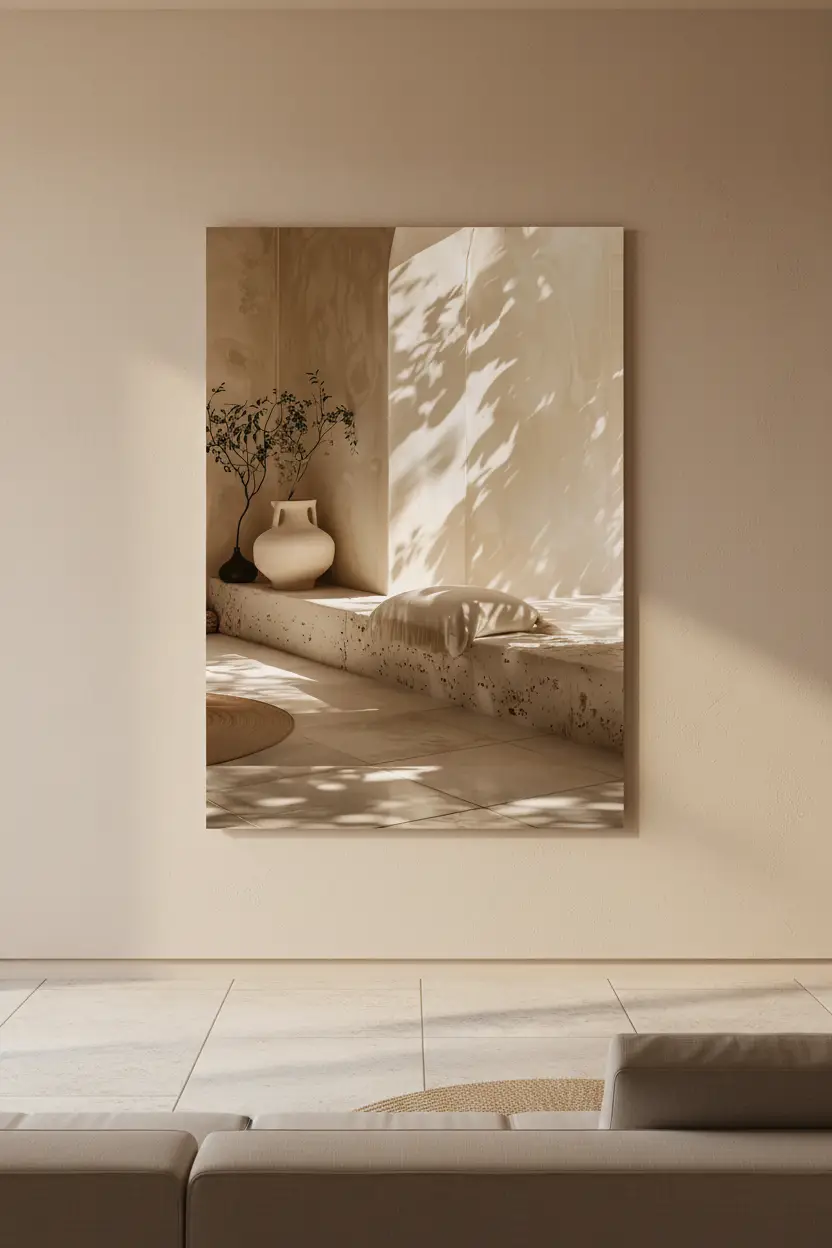
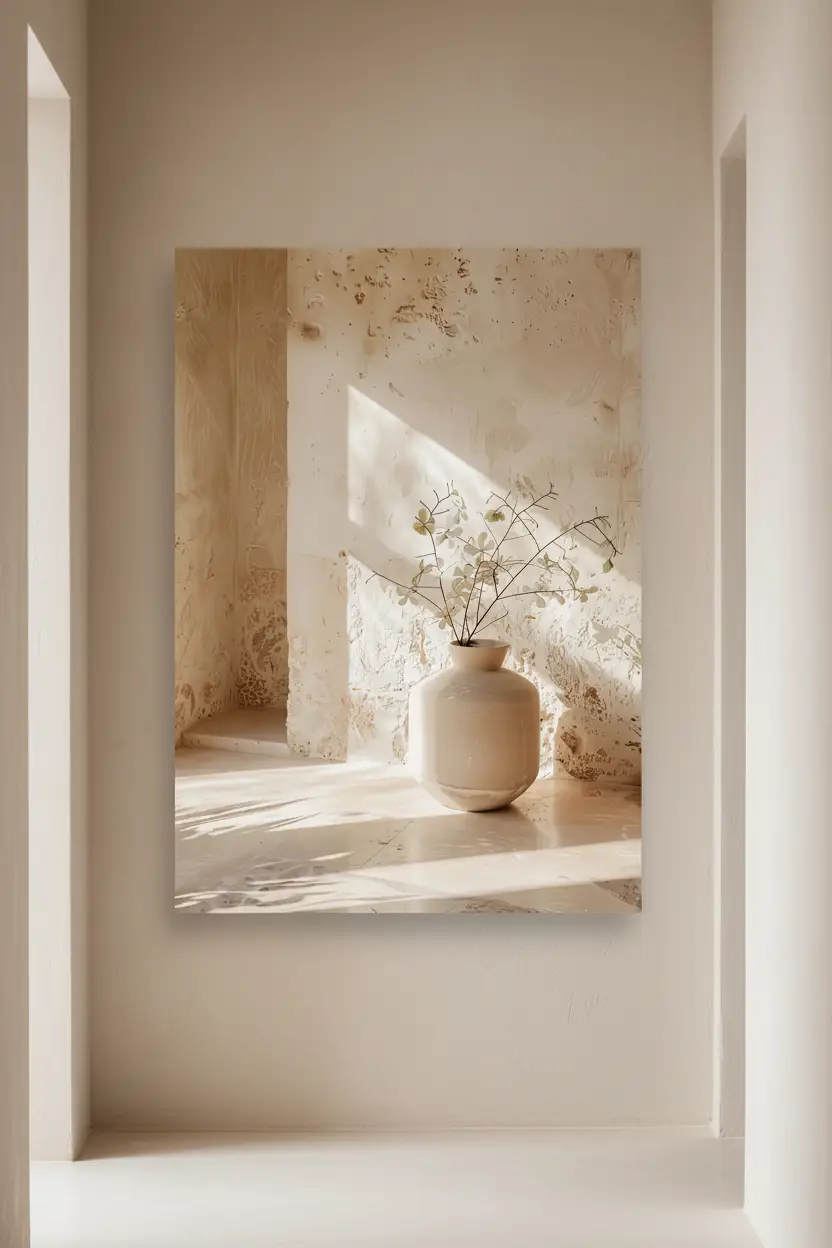
Hängen Sie die Mitte Ihrer Galeriewand auf Augenhöhe (ca. 145–150 cm vom Boden bis zur visuellen Mitte der Anordnung). Für eine Galeriewand über einem Sofa sollte die Unterkante des untersten Drucks 20–25 cm über der Sofalehne liegen. Der Vasenkorridor wirkt wunderbar als einzelnes Statement in einem Flur oder als Ankerdruck in einer größeren Galerieanordnung.
Rahmen: Konsistenz ist alles
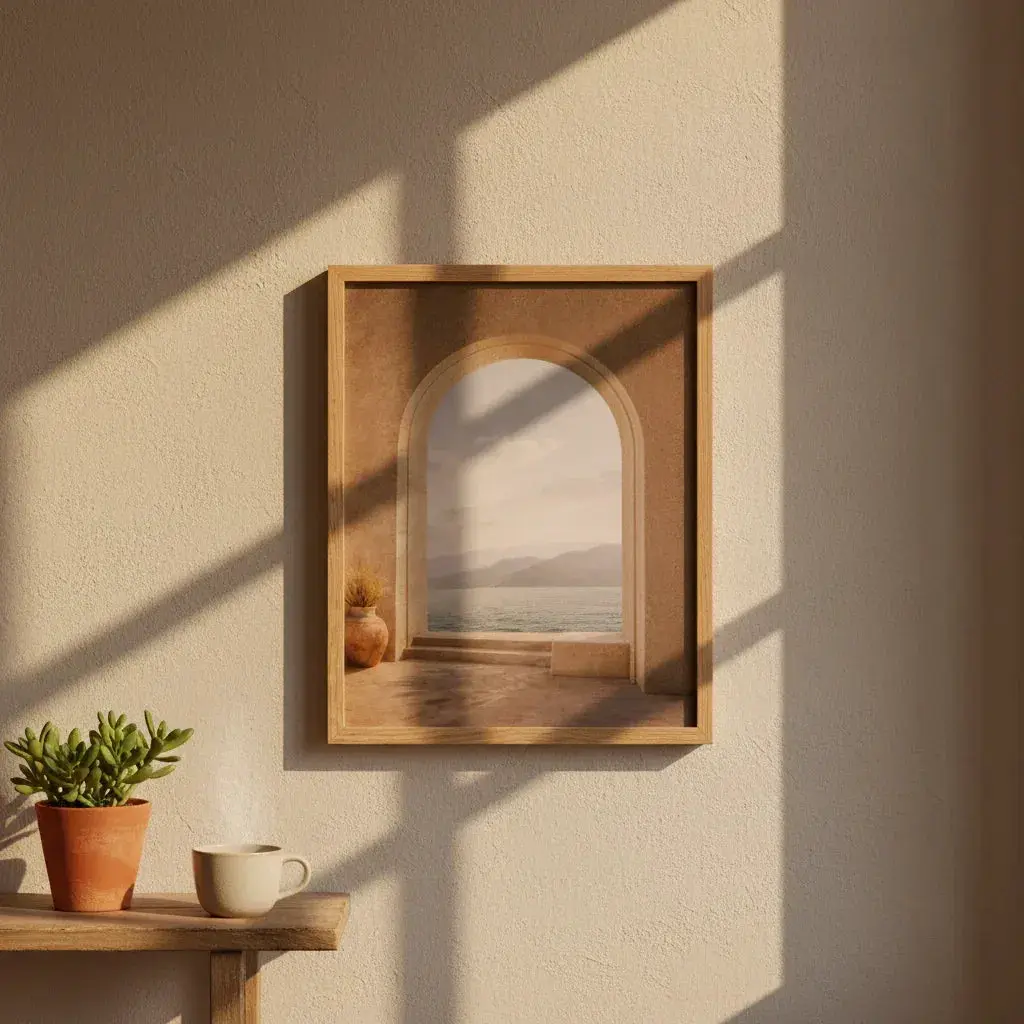
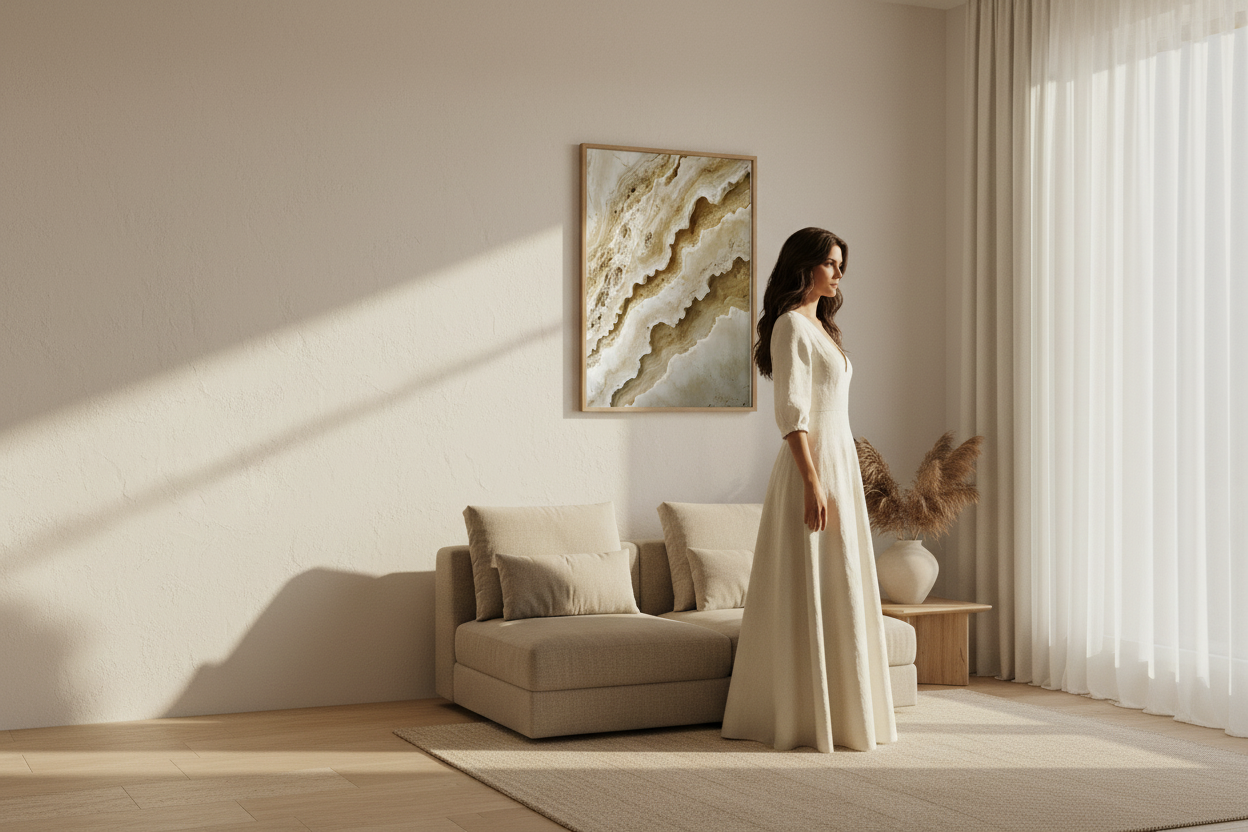
Bei einer Galeriewand ist die Konsistenz der Rahmen wichtiger als bei einem einzelnen Druck. Wählen Sie ein Rahmenmaterial und bleiben Sie bei dieser Anordnung dabei. Natürliches Eichenholz ist die vielseitigste Wahl für ein mediterranes Interieur – es verleiht Wärme, ohne mit den Drucken zu konkurrieren. Vermeiden Sie es, Eichen-, Schwarz- und Weißrahmen in derselben Galeriewand zu mischen: Das Ergebnis ist eher visueller Lärm als kuratierte Ruhe. Und verzichten Sie immer auf ein Passepartout – das Kunstwerk sollte den Rahmen randlos ausfüllen.
Die Fehler, die man vermeiden sollte
- Zu viele Stile mischen – Architektur-Drucke neben typografischen Drucken neben abstrakten Drucken erzeugen Chaos. Bleiben Sie bei einer visuellen Sprache.
- Inkonsistente Rahmung – das Mischen von Rahmenmaterialien oder -farben untergräbt die Kohäsion der Anordnung. Ein Rahmen, ein Material, durchweg.
- Zu hoch hängen – zu hoch aufgehängte Galeriewände wirken von den Möbeln darunter getrennt. Halten Sie das visuelle Zentrum auf Augenhöhe.
- Zu viele Drucke – mehr als fünf Drucke an einer Standardwand wirken fast immer überladen. Bearbeiten Sie gnadenlos.
Minimalistische Wandkunstdrucke kaufen →

FAQ — Wie man eine Galeriewand erstellt
Wie viele Drucke sollte eine Galeriewand haben?
Drei bis fünf Drucke sind für die meisten Wände optimal. Für eine Sofawand ist eine horizontale Linie von drei gleich großen Drucken die eleganteste Lösung. Für eine größere Wand eignen sich vier oder fünf Drucke in einer asymmetrischen Anordnung gut. Weniger als drei können spärlich wirken; mehr als fünf bergen die Gefahr, in einem Raum normaler Größe überladen zu wirken.
Welchen Abstand sollte ich zwischen den Drucken einer Galeriewand verwenden?
Für eine enge, galerieartige Anordnung sind 5–8 cm zwischen den Rahmen ideal. Für ein entspannteres Gefühl bieten 10–15 cm jedem Druck Raum zum Atmen. Vermeiden Sie Abstände von mehr als 20 cm – die Drucke wirken dann unzusammenhängend. Konsistenz ist der Schlüssel: Verwenden Sie denselben Abstand zwischen allen Drucken in der Anordnung.
Sollten alle Drucke in einer Galeriewand die gleiche Größe haben?
Nicht unbedingt – aber das Mischen von Größen erfordert mehr Planung. Eine horizontale Linie von drei gleich großen Drucken ist die einfachste und eleganteste Lösung. Wenn Sie Größen mischen, verankern Sie die Anordnung mit einem größeren Druck und bauen Sie kleinere darum herum. Halten Sie das visuelle Gewicht ausgewogen: Gruppieren Sie nicht alle großen Drucke auf einer Seite.
Welche Rahmen eignen sich am besten für eine Galeriewand?
Wählen Sie ein Rahmenmaterial und verwenden Sie es durchgehend in der Anordnung. Natürliches Eichenholz ist die vielseitigste Wahl für ein mediterranes oder neutrales Interieur. Vermeiden Sie das Mischen von Rahmenmaterialien oder -farben – dies erzeugt visuellen Lärm statt Kohäsion. Und verzichten Sie auf das Passepartout: Kunstwerke, die den Rahmen randlos ausfüllen, wirken sauberer und zeitgemäßer.


Hinterlasse einen Kommentar
Diese Website ist durch hCaptcha geschützt und es gelten die allgemeinen Geschäftsbedingungen und Datenschutzbestimmungen von hCaptcha.